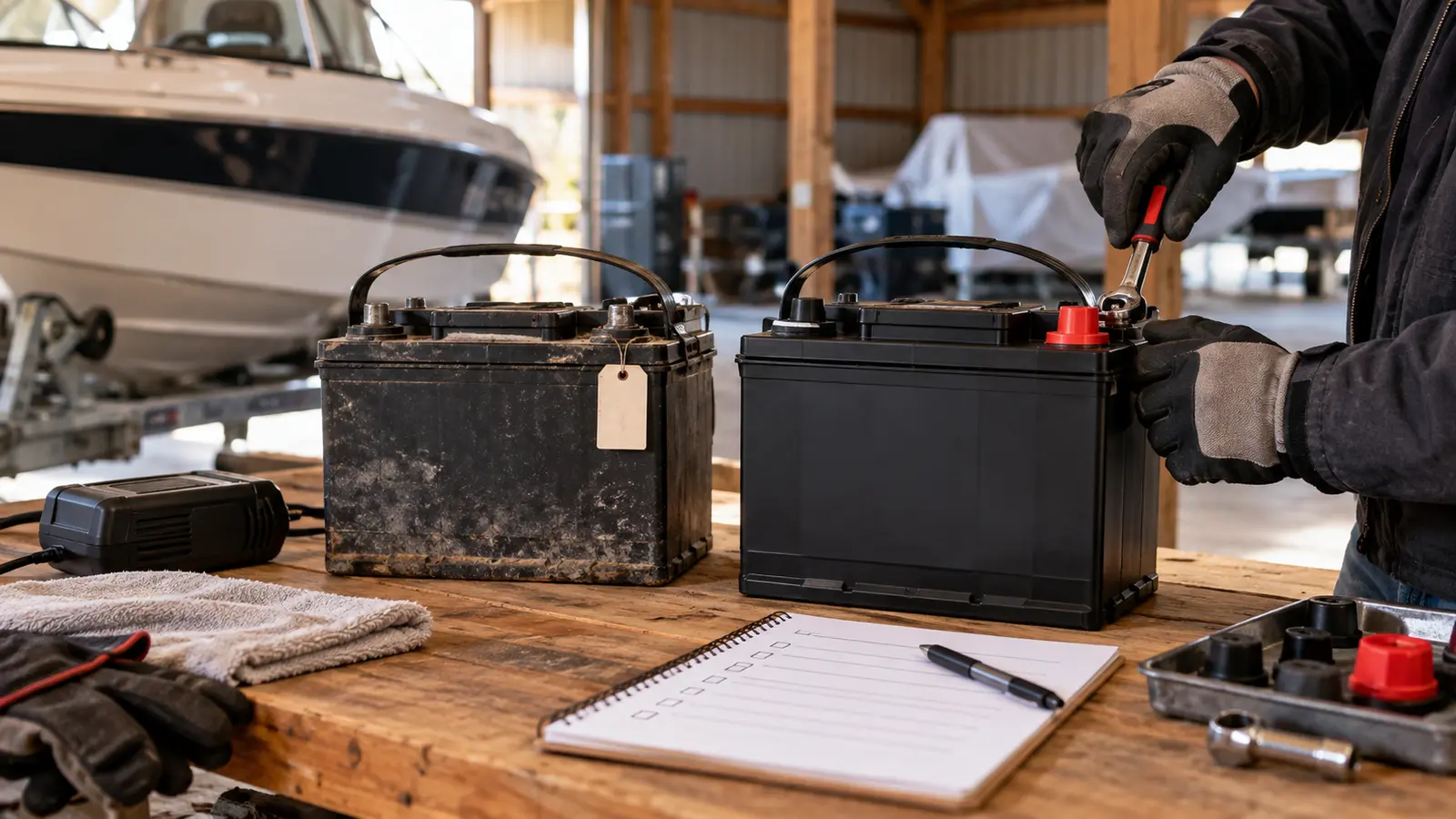
Many lead-acid marine batteries serve for several seasons, but there is no honest single replacement age. Interstate notes roughly three to six years for deep-cycle batteries, with actual life depending on maintenance and treatment. Lithium products use different cycle-life specifications and battery-management requirements.
What shortens battery life?
- Repeated deep discharge: using more capacity than the battery is designed to deliver reduces cycle life.
- Long periods partly discharged: lead-acid batteries are especially vulnerable when left at a low state of charge.
- Incorrect charging: undercharging, overcharging or the wrong chemistry profile can cause lasting damage.
- Heat: high temperatures accelerate chemical aging.
- Freezing while discharged: a discharged lead-acid battery is more vulnerable to freezing damage.
- Vibration and poor mounting: movement can damage the case and internal components.
- Corroded or loose connections: resistance interferes with starting and charging and can create heat.
Starting versus deep-cycle batteries
A starting battery is designed for short, high-current engine cranking. A deep-cycle battery is built for repeated energy delivery to house loads or trolling motors. A dual-purpose battery compromises between these jobs. Using the wrong type can shorten life even if the battery physically fits.
Signs a battery may need replacement
- Cranking is slow after a verified full charge.
- Runtime has fallen noticeably with the same loads.
- The battery loses charge rapidly while disconnected and stored correctly.
- A proper capacity, conductance or load test fails.
- The case is swollen, cracked or leaking, or terminals show heat damage.
Swelling, leaking, unusual heat or odor are stop-use conditions. Isolate the area safely and seek professional help.
How to help a boat battery last longer
- Use the correct battery type and size for the starting or house-bank job.
- Secure it in an approved battery box or tray with protected terminals.
- Recharge promptly with a compatible charging profile.
- Prevent unnoticed loads during storage without disabling required safety circuits.
- Keep terminals clean and connections tightened to the specified torque.
- Follow the maker’s storage and maintenance instructions.
- Track installation date, test results and unusual discharge events.
Plan capacity before replacing
If the old battery was regularly discharged too deeply, replacing it with the same capacity repeats the problem. Measure loads, operating time and required reserve. Starting and house functions may need separate battery banks and professionally designed switching and charging.