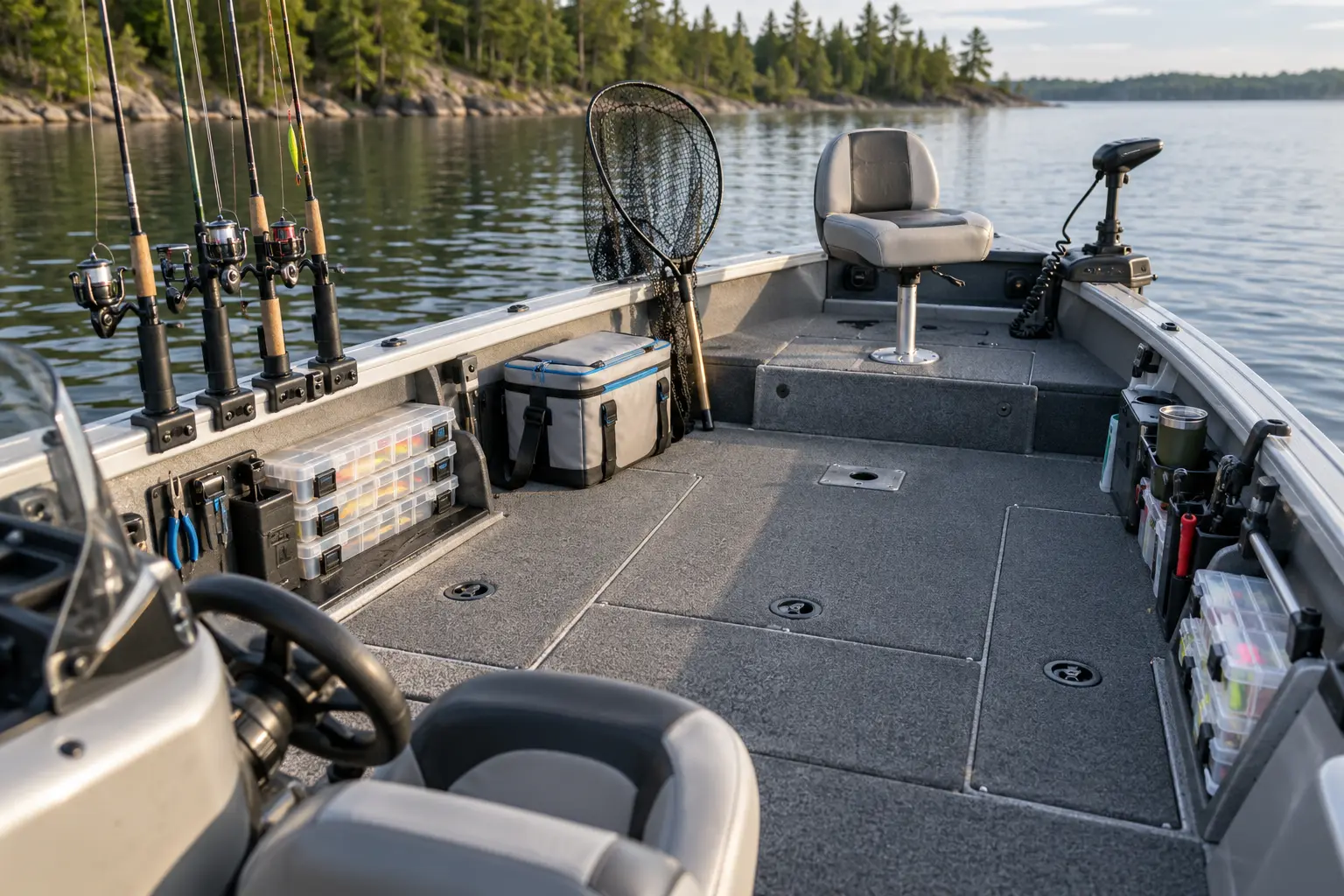
The best small-boat storage system is not the one that holds the most gear. It keeps the helm, passenger positions, walkways and required safety equipment clear while placing frequently used fishing tools within controlled reach.
Quick answer: How do you organize fishing gear on a small boat?
Divide the boat into five zones: helm, movement, active fishing, secured storage and emergency access. Remove gear that does not serve the trip, secure rods and boxes for travel, keep hooks covered, mount tools where they cannot fall overboard, and confirm every new holder or fastener is compatible with the boat’s structure and systems.
Start with five zones
| Zone | Keep there | Keep out |
|---|---|---|
| Helm | Controls, navigation, communication and one secured essential tool | Tackle boxes, loose lures and bags |
| Movement | Nothing permanent; preserve a stable path | Rod tips, net handles, coolers and loose line |
| Active fishing | One working rod, current lure or bait tools and the landing method | The full tackle collection |
| Secured storage | Closed tackle, spare rods, food, clothing and backup tools | Wet or sharp items without containment |
| Emergency access | Life jackets, extinguisher, first aid, throwable device and communication gear | Anything that delays access |
Bring less before adding storage
Storage hardware cannot fix overpacking. Define the species, techniques and trip length, then remove rods, tackle and accessories that do not support that plan. A small waterproof box for the day’s terminal tackle is easier to secure and use than several large trays spread across the deck.
- One active rod per angler plus a reasonable shared backup is a practical starting point.
- Carry only the lure families, hooks, leaders and weights needed for the planned techniques.
- Move rain gear, food and spare clothing into soft or fitted storage that cannot slide.
- Leave bulky “maybe” items ashore unless conditions make them necessary.
Secure rods without creating hazards
Rod storage must work in two modes: travel and fishing. During travel, rods should not bounce free, cross passenger space or extend where they may strike a dock, branch or person. During fishing, the active rod should be accessible without swinging hooks through the cockpit.
- Use rod holders designed for the rod, reel and expected loads.
- Position tips away from faces, walkways and casting lanes.
- Secure hooks in keepers or covers rather than leaving lures swinging.
- Confirm vertical holders will clear bridges, storage roofs and overhead obstacles.
- Do not mount a holder where its fasteners could enter wiring, fuel systems or flotation spaces.
Use a working box and a reserve box
Keep one small “working” tackle box accessible in the fishing zone and the reserve supply closed in secured storage. Label by technique or species rather than mixing everything together. Transparent lids can help identify contents without opening multiple trays, but sunlight and heat can affect some materials and products.
Pliers, cutters and a dehooking tool should have dedicated holders or tethers that do not create entanglement. Rinse and dry salt-exposed tools as their manufacturer directs before returning them to storage.
Place the landing net and cooler deliberately
Choose the normal landing side of the boat. Secure the net near that position with the handle out of the movement path. A loose net on the floor catches feet, hooks and line. If the boat is too small to keep a full-size net safely accessible, reconsider the net size or fishing plan instead of balancing it across the boat.
A cooler is heavy when loaded. Place it where the boat builder permits, where it will not upset balance or block access, and secure it against sudden movement. Do not treat a cooler lid as an extra casting platform unless both the cooler and the boat arrangement are designed for that use.
Control hooks and discarded line
Use a closed container for used hooks, damaged lures and cut line. Fishing line can wrap around propellers, pumps and wildlife. Do not leave tag ends on deck or throw them overboard. A small dedicated waste tube or container is more reliable than a pocket that may empty in the wind.
Respect weight, capacity and balance
Every storage system adds weight, and fishing trips add batteries, a trolling motor, fuel, ice, catch and passengers. Check the boat’s capacity information and distribute load as the builder directs. Heavy items should not be moved casually to one side or high above the deck merely because storage space is available.
If you are planning trolling-motor or electronics power, use the battery runtime calculator for an initial estimate and confirm the final battery, wiring and charging system with manufacturer guidance.
Use a ten-minute reset after every trip
- Remove trash, cut line, bait and fish residue.
- Rinse or clean gear using material-appropriate instructions.
- Open wet boxes and compartments to dry fully.
- Return tools and tackle to labeled positions.
- Inspect hooks, leaders, rod guides, reels and nets for damage.
- Restock only the items actually used.
Saltwater use needs prompt corrosion control. The Boat Fishing hub will connect future cleaning and maintenance guides as they are published.
Research before adding more hardware.
Boat-specific rod holders, tackle storage and net solutions will appear only after installation requirements, fit and product identity are verified.
Frequently asked questions
How should fishing rods be stored on a small boat?
Use holders or racks designed for the boat and rod type, keep tips out of faces and walkways, secure rods for travel, and confirm installation does not interfere with controls, wiring or flotation spaces.
Where should a landing net go?
Keep it secured within reach of the normal landing position but outside the main walkway, controls and emergency-equipment access.
How much tackle should I bring?
Bring only the tackle needed for the intended species, water and techniques, plus a small backup selection. A compact labeled system is easier and safer than several loose boxes.