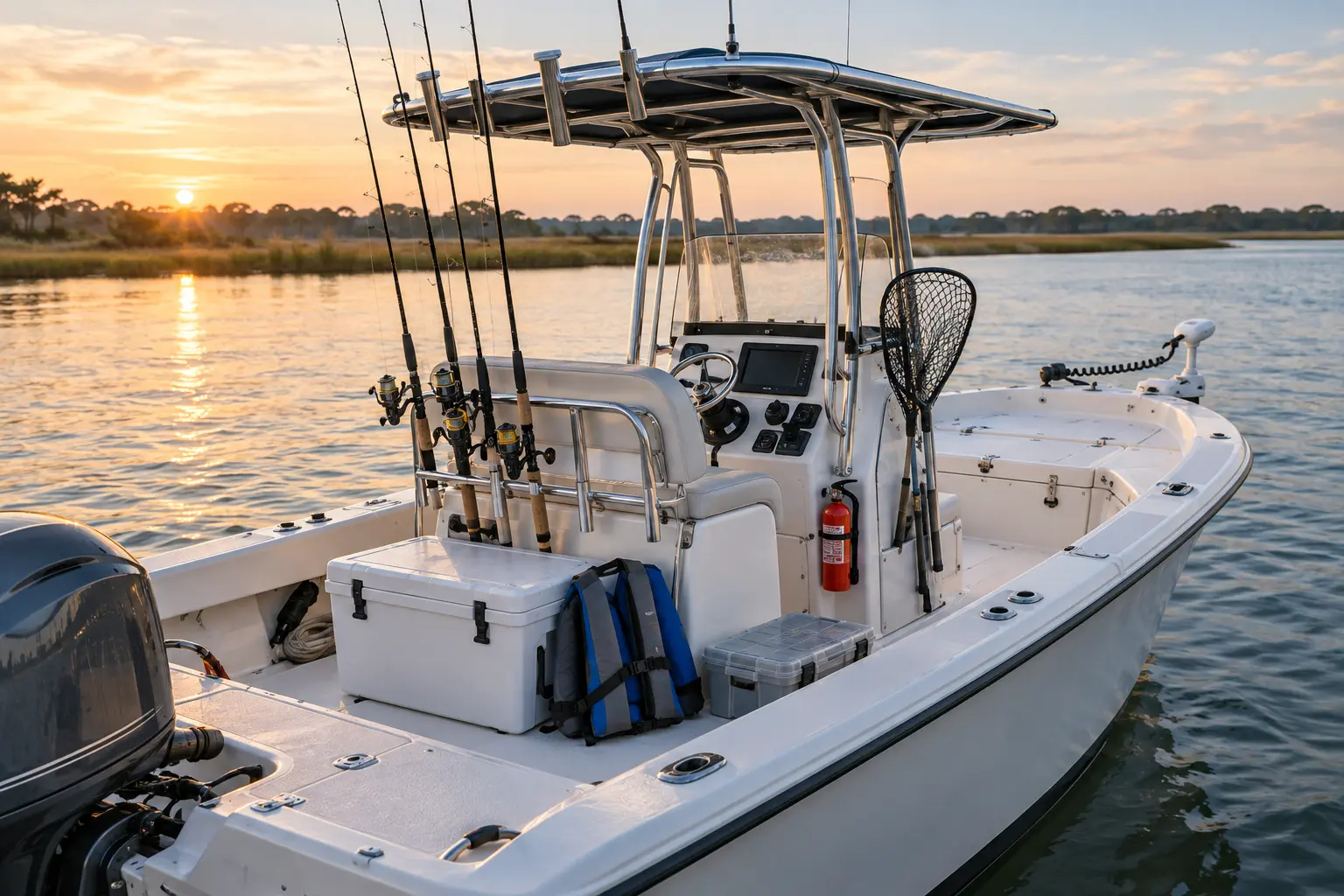
A good beginner boat-fishing checklist starts with the boat and the people—not the tackle. Confirm legal requirements, weather, capacity, power and communications first. Then bring a compact fishing setup that fits the species, water and available deck space.
Quick answer: What do you need for fishing from a boat?
You need required boating safety equipment, properly fitted life jackets, current licenses and regulations, a working communication plan, enough fuel or battery reserve, basic first aid and sun protection, one or two suitable rod setups, a small tackle selection, line-cutting tools, a landing method, secure storage, drinking water and a plan for keeping or releasing fish responsibly.
1. Check the trip before packing fishing gear
Start with the trip profile: where you will launch, how far you plan to travel, who is aboard, likely weather, daylight, water temperature and whether you will remain in protected water or enter larger open water. These choices determine the safety equipment, communications, clothing and reserve you need.
- Check the marine or local forecast and expected changes during the outing.
- Confirm the boat is within its capacity and everyone has a suitable seating position.
- Tell a responsible person the launch point, area, passengers and expected return time.
- Plan fuel or battery use with a meaningful reserve rather than the estimated maximum.
- Confirm the launch, trailer, drain plug where applicable, steering, navigation lights, horn and engine or propulsion system.
If the boat has been sitting, use the boat maintenance checklist before treating the trip as a fishing problem.
2. Required and practical safety equipment
The Coast Guard’s federal boating guide covers life jackets, fire extinguishers, visual distress signals, sound-producing devices, navigation lights and other requirements. State rules or the operating area may add obligations. Carrying an item is not enough: it must be serviceable, accessible and appropriate for the people and conditions.
Boat-fishing safety check
0 of 9 completed (0%)
Keep safety gear separate from tackle. A life jacket buried under bags or a fire extinguisher blocked by a cooler is not ready for an emergency.
3. Licenses, seasons and fish-handling rules
Do not rely on last year’s rule, a social post or a dock conversation. NOAA directs anglers to state fish and wildlife agencies for state-water licenses and publishes federal-water resources by region and species. Rules can cover seasons, size, possession, gear, reporting, protected species and where fish may be landed.
- Carry the required license, registration or permit in the accepted format.
- Save or print the current rules for the water and species you may encounter.
- Bring a measuring device suitable for the regulation.
- Understand whether fish must remain whole, may be filleted, or require reporting.
- Know how to identify protected or restricted species before leaving the dock.
4. Beginner rods, reels and tackle
For a first trip, one primary rod-and-reel setup and one backup are usually more useful than a crowded bundle. Match rod power, line and terminal tackle to the intended species and technique. If you do not yet know what you will target, ask a local tackle shop or guide for a simple setup based on the exact water—not a universal “boat rod.”
Compact tackle list
- A small waterproof box with only the hooks, weights, leaders, swivels and lures needed for the plan
- Line cutters or fishing pliers secured where they can be reached
- Spare leader and a modest amount of replacement line
- A dehooking tool appropriate to the species and hook style
- Gloves only when they are appropriate for the species and handling method
Keep loose hooks, lures and cut line off the deck. Store rigged hooks in a holder or keeper, and collect discarded line so it cannot enter the water or wrap around a propeller.
5. Landing, measuring and releasing fish
Choose a landing method before the first fish is hooked. A net should fit the expected fish and remain secured but reachable. Large, toothy, spined or protected species may need specialized handling or immediate professional guidance. Never improvise dangerous handling because a fish is beside the boat.
If releasing fish, prepare tools before lifting it aboard, minimize handling time and follow current species-specific guidance. If keeping fish, plan legal measurement, cooling and storage before departure. A general cooler is not automatically suitable for every catch or trip duration.
6. Storage that preserves a clear deck
Divide the boat into movement, fishing and storage zones. Rod tips should not cross faces or walkways. Tackle boxes should be secured against wake and turns. The net should not cover controls, and a cooler must not become an unstable step. The full small-boat fishing organization guide shows a zone-by-zone system.
7. Electronics and power
A phone, fish finder, livewell, aerator, lighting and trolling motor can turn a simple trip into a significant electrical load. Confirm that electronics are protected from water, mounted without obstructing the helm and supported by the correct fusing, wiring and battery bank.
Use the battery runtime calculator for a first estimate, then apply the battery and equipment manufacturers’ limits. A runtime estimate is not a navigation or emergency guarantee. If you are choosing sonar for the first time, read how to choose a fish finder.
Complete beginner packing checklist
| Category | Bring or confirm | Common beginner mistake |
|---|---|---|
| Boat | Fuel or charge, drain plug where applicable, controls, anchor, lines and fenders | Planning to maximum range with no reserve |
| Safety | Required equipment, fitted life jackets, first aid, communication and float plan | Burying safety equipment under fishing gear |
| Legal | Current license, regulations, species ID and measuring device | Using an old screenshot or another state’s rule |
| Fishing | One or two rod setups, compact tackle, cutters, dehooker and net | Bringing too much loose tackle |
| People | Water, food, sun protection, layered clothing and medication | Packing only for the forecast at launch time |
| Catch care | Release tools or legal measuring and cooling plan | Deciding how to handle fish only after landing one |
Looking for verified boat-fishing products?
The product category is ready, but recommendations will be added only after identity, fit, specifications and destination links are verified.
Frequently asked questions
What fishing gear should a beginner bring on a boat?
Start with one or two suitable rod-and-reel combinations, a small tackle selection for the intended species and water, line tools, a landing net where appropriate and secure storage. Boat safety, weather, communications and required equipment come before optional fishing gear.
Do I need a fishing license when fishing from a boat?
Requirements depend on the state, water, species, age and trip type. Check the current state fish and wildlife agency and applicable NOAA federal resources before fishing.
What safety equipment should be on a fishing boat?
Requirements depend on the boat, operating area and jurisdiction. Use the current U.S. Coast Guard federal requirements guide and state boating agency rules, and carry properly fitted serviceable life jackets for everyone aboard.