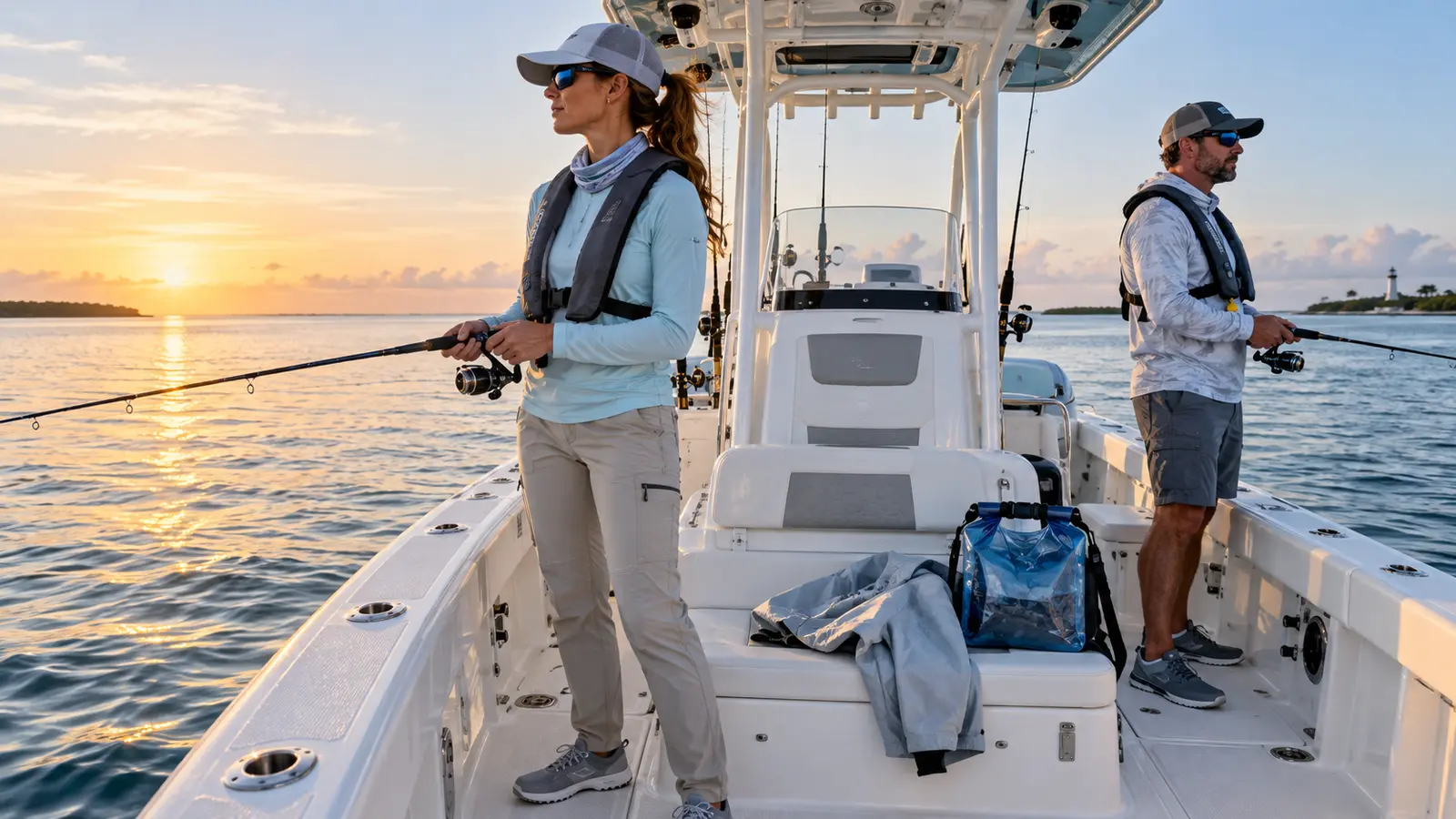
Editorial image showing a generic warm-weather fishing setup. Match clothing and flotation to the actual water, weather, boat and activity.
Wear a properly fitted life jacket, secure deck shoes, quick-drying layers, sun protection and a wind or rain shell when fishing from a boat. Build the outfit around the water temperature and marine forecast, not just the temperature at the dock. Keep one dry insulating layer and dry socks protected aboard. That simple system answers what to wear fishing on a boat more reliably than a fixed summer or winter outfit.
A practical boat-fishing outfit
- Base layer: lightweight, quick-drying shirt and underwear that stay comfortable if spray reaches the cockpit.
- Sun layer: long sleeves, a secure brimmed hat or cap, and wraparound sunglasses that block UVA and UVB.
- Warmth: a packable mid-layer chosen for the water temperature, wind and trip duration.
- Weather shell: breathable rain protection with cuffs and closures that do not snag tackle or restrict movement.
- Life jacket: a U.S. Coast Guard-approved model that fits the wearer, activity and conditions.
- Footwear: secure, quick-drying shoes with clean non-marking soles and traction suitable for the deck.
- Dry backup: an insulating layer and socks kept above spray in a secured waterproof container.
Start with water temperature and the marine forecast
The first clothing decision is not shorts versus pants. It is what happens if the wind rises, rain arrives or someone enters the water. The National Weather Service warns that warm air can create a false sense of security because lakes and coastal water may remain dangerously cold. Cold shock can disrupt breathing and movement before classic hypothermia develops.
Check the official marine forecast, wind, waves, precipitation, air temperature and water temperature before leaving. Recheck before the return leg. If the forecast exceeds the boat, crew or clothing plan, change the route or stay ashore. Clothing improves readiness; it does not make unsafe conditions acceptable.
Build the outfit in four layers
1. A quick-drying base
Choose a shirt and lower layer that allow a full range of movement at the helm and while landing fish. Smooth cuffs, covered pockets and minimal loose cord reduce places for hooks and line to catch. A longer hem and higher collar can add coverage when you sit or bend.
2. Sun coverage
Water and an open deck leave little shade. The CDC recommends a layered sun-protection approach that includes protective clothing, a wide-brimmed hat, UV-blocking sunglasses, shade when available and broad-spectrum sunscreen on exposed skin. A long-sleeve sun shirt and light pants can reduce the amount of sunscreen needed on arms and legs, but exposed hands, face, ears and neck still need attention.
Secure hats and glasses so they do not become loose gear. A neck gaiter can add coverage, but it should not interfere with breathing, hearing, peripheral vision or the life jacket.
3. Insulation for wind and water
Boat speed and damp clothing can make a mild day feel cold. Carry a packable mid-layer even when you do not expect to wear it at launch. The layer should fit under the life jacket without preventing adjustment or changing how the flotation device sits. Bulky clothing that prevents a correct fit is the wrong combination.
4. A rain and wind shell
A shell should close securely without long drawcords, loose toggles or fabric that can catch a rod, cleat or control. Choose enough room for the planned mid-layer, then test casting, steering, kneeling and reaching before the trip. Bibs can improve lower-body coverage, but the suspenders and waist still need to work with the life jacket and the boat's seating.
What shoes to wear on a fishing boat
Use secure shoes that stay on the foot, drain or dry appropriately, and give predictable grip on the boat's actual deck. Clean non-marking soles help protect finished surfaces. Closed toes add a useful barrier around hooks, sinkers, hatch edges and hardware, but no shoe eliminates those hazards.
| Footwear feature | Why it matters aboard | Check before launch |
|---|---|---|
| Secure heel and closure | Keeps the shoe in place while boarding and moving around the cockpit | Laces, straps and pull loops do not trail or snag |
| Wet-deck traction | Reduces slipping when spray, rain or fish slime reaches the deck | Sole is clean, unworn and compatible with the deck material |
| Non-marking sole | Helps avoid dark transfer on finished decks | Test an inconspicuous area if the sole or deck is unfamiliar |
| Closed toe | Adds protection from tackle and low hardware | Toe box still allows balance and does not trap excessive water |
| Quick drainage or suitable waterproofing | Keeps the foot more comfortable after spray | Choice matches temperature; water-trapping footwear can be a cold-weather problem |
Loose flip-flops, smooth worn soles and barefoot fishing are poor defaults on a deck with hooks, cleats and changing motion. Aggressive studded soles may damage some decks. Wading footwear is designed for a different surface and should not be assumed safe for fiberglass, aluminum or finished flooring.
Clothing supports comfort, but the separate boating safety equipment guide explains life-jacket carriage, condition and access requirements.
Fit the life jacket with the clothing you will wear
The U.S. Coast Guard recommends wearing a life jacket while underway. Choose an approved model for the intended use, correct size and operating conditions, then adjust it over the final clothing system. Test reach and movement without loosening it beyond the maker's instructions.
Inflatable models have use restrictions and maintenance requirements. They are not appropriate for every person, activity or temperature. Read the label and manual for the exact model. Follow current federal and state requirements, including child-wear rules and any activity-specific rules.

HEETA 5L Dry Bag
Useful for: a compact personal kit such as dry socks, one light layer, sunscreen and small essentials.
Limitation: five liters is too small for bulky clothing, and the manufacturer does not position the bag for underwater use. Secure it above standing water.
Go to review pageThe review covers the verified blue 5-liter variant, closure steps and storage limits.Outfit examples by condition
Hot, sunny inland trip
Start with a lightweight long-sleeve shirt, quick-drying pants or shorts, secure deck shoes, a brimmed hat, sunglasses and the correctly fitted life jacket. Carry a light shell because thunderstorms, wind and spray can change conditions quickly. Use shade during breaks when the boat provides it.
Rainy or windy coastal trip
Add a breathable waterproof shell and pants or bibs with closures that keep cuffs away from tackle. Wear a base layer that moves moisture and a mid-layer that remains useful if the cockpit cools. Keep gloves task-appropriate so you can still operate controls, release buckles and handle line safely.
Cold-water spring or fall trip
Dress for the water, not only the afternoon air. Use insulation that stays protected from spray, a weatherproof outer system and cold-water protection appropriate to the activity. Keep a complete dry backup set available. Shorten the route and increase the safety margin because a wet person may cool rapidly even after leaving the water.
Early morning that becomes warm
Use thin removable layers instead of one heavy garment. Stow each removed layer immediately so it cannot blow overboard or block the deck. Keep sun coverage ready before the glare and UV exposure increase.
What not to wear
- Loose scarves, long drawcords or unsecured straps: they can catch tackle, rails, controls and rotating equipment.
- Jewelry or accessories that snag: keep the casting and working area simple.
- Footwear with smooth or contaminated soles: oil, sunscreen and fish residue can reduce traction.
- Bulky layers that compromise life-jacket fit: verify the complete system before leaving.
- Dark heavy clothing for extreme heat without a plan: select coverage and ventilation together, and carry enough drinking water.
- Clothes that cannot be changed after getting wet: a dry backup is a safety margin, not a comfort luxury.
Pack a dry backup layer
A small dry kit should contain dry socks, an insulating top and any medication or personal item that cannot get wet. Add dry gloves or a warm hat when conditions justify them. Pack the items inside their own inner pouch if moisture would create a serious problem, then stow the container where it cannot slide, block a hatch or become a trip hazard.
A 5-liter bag handles only a compact personal set. Bulky fleece, towels or clothing for several people require a larger container. The HEETA 5L dry bag review explains the actual capacity and why a soft roll-top bag should not be treated as a submersible electronics case.
Read the HEETA 5L Dry Bag review
Use the review to decide whether five liters can hold your planned spare layer and small essentials. Size up when you need towels, shoes or clothing for more than one person.
Go to review pagePre-launch clothing checklist
- Official marine forecast, wind, rain and water temperature checked.
- Clothing plan matches the coldest and wettest credible part of the trip.
- Life jacket is approved for the use, correctly sized and adjusted over final layers.
- Hat and sunglasses are secure without creating a snag hazard.
- Shoes stay on the foot and have clean, serviceable, deck-compatible soles.
- Shell allows steering, casting, boarding and life-jacket access.
- Dry socks and an insulating layer are protected and secured aboard.
- No loose drawcord, strap or jewelry can reach tackle or controls.
- Trip plan, required safety equipment and communications are complete.
Clothing is only one part of trip preparation. Use the boat fishing essentials checklist for required gear, communications, licenses, tackle and launch planning. The small-boat organization guide helps keep spare layers and tackle out of walkways.
Boat-fishing clothing questions
What should I wear fishing on a boat in hot weather?
Wear lightweight clothing that covers exposed skin, a brimmed hat, UV-blocking sunglasses, a properly fitted life jacket and secure deck shoes. Add broad-spectrum sunscreen to exposed skin and carry a light rain or wind layer.
What should I wear on a fishing boat?
Use quick-drying layers, sun protection, a weather shell, a properly fitted life jacket and secure deck shoes. Adjust the insulation and cold-water protection to the water temperature, forecast and rescue time.
What should I wear when fishing on a boat if the weather may change?
Use removable layers and carry a waterproof outer shell plus one dry insulating layer. Check the marine forecast before launch and turn back before conditions exceed the boat, crew or clothing plan.
What shoes should I wear on a fishing boat?
Choose secure, quick-drying shoes with clean non-marking soles and traction suited to wet deck surfaces. Closed toes add protection around tackle and hardware. Confirm that the sole will not damage the boat's deck material.
Should I wear a life jacket while fishing?
The U.S. Coast Guard recommends wearing a life jacket while underway. Use a U.S. Coast Guard-approved model that fits the wearer, the activity and the operating conditions, and follow current state and federal requirements.
What spare clothing should I pack for boat fishing?
Pack at least one dry insulating layer and dry socks, plus a weather shell if conditions can change. Keep the backup set protected from spray in a secure dry bag or other suitable waterproof container.
Official sources and editorial method
BoatOwner Hub checked current federal weather, life-jacket and sun-protection guidance on October 8, 2026. This is general trip-planning information. The exact life jacket, cold-water gear, clothing and footwear instructions take priority, along with current federal, state and local rules.
- U.S. Coast Guard: Life Jacket Wear
- National Weather Service: Cold Water Hazards and Safety
- National Weather Service: Know What to Do When Weather Changes
- CDC: Reducing Risk for Skin Cancer