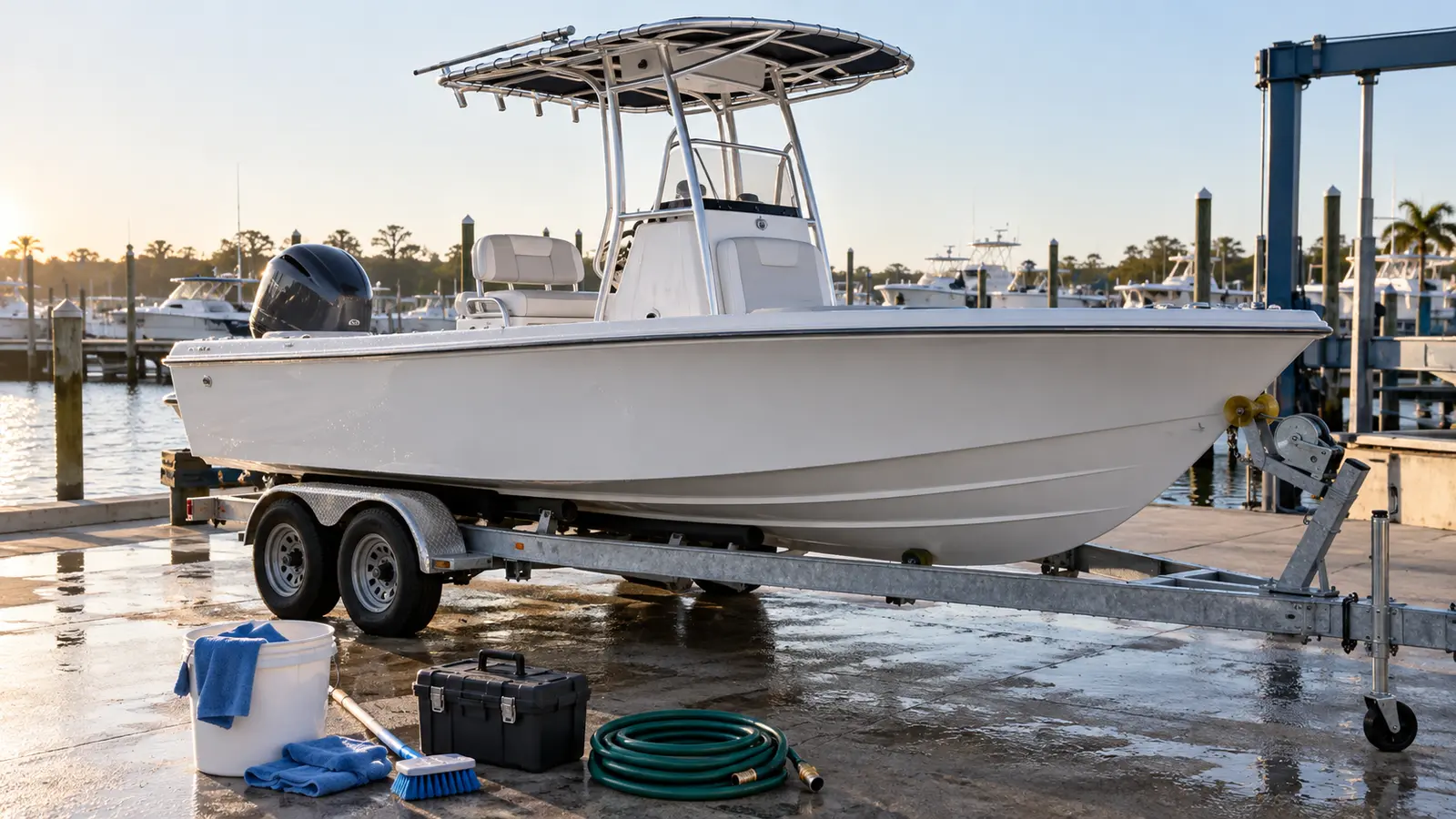
A useful boat maintenance checklist does not give every boat the same service interval. It combines a short routine you can repeat with the exact requirements in your boat, engine, drive, battery, trailer and equipment manuals.
Quick answer
Inspect safety-critical items before every outing, clean and dry the boat after use, perform a deeper visual check each month, and schedule engine, drive, hull, battery and trailer work by both calendar time and operating hours. When two intervals apply, follow the one that comes first.
Build the checklist around your exact boat
Gather the documents that define your real schedule: the boat owner’s manual, engine and drive manual, battery and charger instructions, trailer manual and manuals for major equipment such as a generator, sanitation system or windlass.
List every time-based and hour-based interval in one place. An engine task may be due annually or after a stated number of hours. Fire extinguishers, flares, batteries and inflatable life jackets may have dates or inspection rules of their own. Saltwater, heavy use, silty water, freezing weather and outdoor storage may justify more frequent checks.
Before every outing
Keep this check short enough to use every time. Its purpose is to catch changes that could affect safe operation or leave you stranded.
- Walk around the boat. Look for impact damage, loose hardware, new stains, leaks and anything that changed since the last trip.
- Check required fluids. Confirm fuel and inspect engine oil, coolant or other levels specified for your propulsion system.
- Inspect batteries. Confirm they are secured and terminals protected. Look for corrosion, swelling, leaks, heat damage or unusual odor.
- Test essential equipment. Verify navigation lights, horn, bilge pumps and other equipment required for the planned trip.
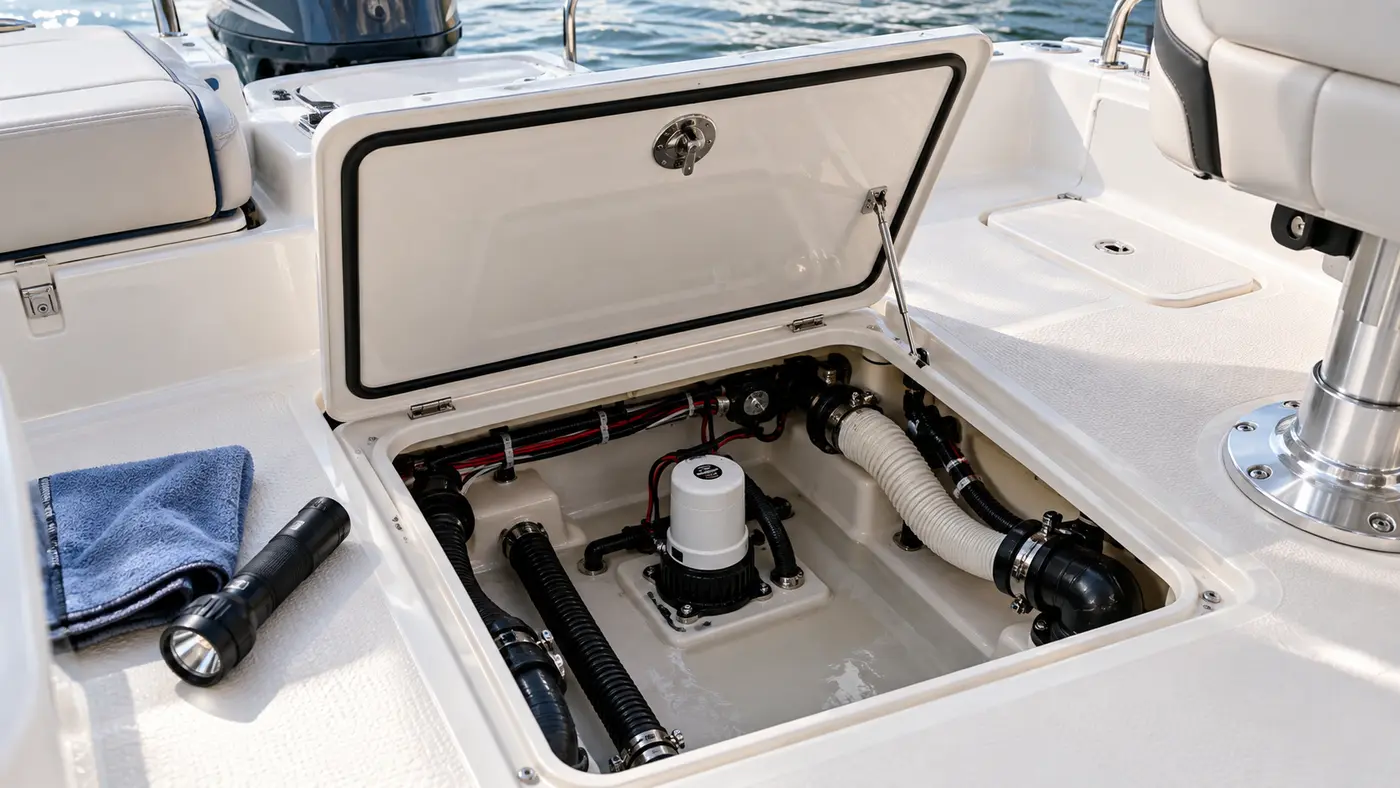
- Check the bilge. Investigate unexpected water, fuel odor or oily residue instead of simply pumping it overboard.
- Inspect steering and controls. Binding, excess play or a fluid leak requires diagnosis before departure.
- Look at the propeller and intakes. Check for visible impact damage, tangled line or blocked water intakes with the engine safely off.
- Verify safety equipment. Make sure wearable life jackets fit everyone aboard and required equipment is accessible and serviceable.
- For trailered boats: confirm the launch setup, drain plug when required, dock lines and fenders.
The U.S. Coast Guard’s resources emphasize life-jacket use and provide a safety-equipment checklist in its boating app. Mechanical maintenance and safety preparation are separate checks; both belong in the departure routine.
After every outing
- Record engine hours and unusual behavior while the details are fresh.
- Follow the engine maker’s flushing procedure when required. Never improvise the cooling-water supply.
- Rinse suitable exterior surfaces after saltwater or dirty-water use without forcing water into vents or electrical connections.
- Remove plant material, fishing line and debris from accessible areas.
- Empty trash, wipe spills and dry compartments. Unexpected water needs a cause, not only a towel.
- Let upholstery, lockers and covers dry with appropriate ventilation before storage.
- Add problems to a written “before next trip” list and label the controls if the boat should not be used.
Monthly checks during the season
A monthly inspection goes beyond the pre-trip glance. Choose a bright, dry day, open normally accessible compartments and compare the boat with earlier notes or photos.
Hull, deck and fittings
- Inspect the hull for new cracks, blisters, impact marks, corrosion or changed coatings.
- Check rails, cleats, hinges, latches, seats and windshield hardware for movement.
- Look for separation or gaps in sealant; find the cause of a leak before covering it with new material.
- Inspect accessible through-hulls, seacocks and hoses for leaks, corrosion, softness or loose clamps.
Electrical and battery system
- Look for loose, corroded or overheated connections and chafed insulation.
- Confirm batteries remain firmly secured and protected from accidental short circuits.
- Check state of charge using equipment and reference values appropriate for the battery chemistry.
- Test pumps, lights and alarms; repeated fuse or breaker trips need diagnosis, not a larger fuse.
For deeper help, see how to test a boat battery and how to charge it safely.
Engine, drive and controls
- Inspect accessible fuel lines, primer bulbs, connections and filters for cracks or leaks.
- Check hoses, belts and wiring identified for owner inspection.
- Inspect the propeller and lower unit for damage, fishing line, leaks or corrosion.
- Check sacrificial anodes by the maker’s criteria and never paint them.
- Note changes in starting, idle, cooling-water flow, charging, steering, vibration or fuel consumption.
Safety and onboard systems
- Check life jackets for damage, mildew, altered straps or missing labels.
- Inspect fire extinguishers for accessibility, condition and applicable date requirements.
- Review visual distress signals and other date-sensitive equipment.
- Test carbon-monoxide and smoke alarms where fitted.
- Inspect dock lines, fenders, anchor, rode and mounting points for wear.
Service by engine hours and calendar time
Do not choose between an hour meter and a calendar: use both. A heavily used boat may reach a service threshold before the season ends. A lightly used boat still ages and may need annual work even when the hour meter barely moves.
| Trigger | What to do | Why |
|---|---|---|
| Hour interval | Complete the exact engine or drive tasks listed for that operating-hour mark. | Wear and fluid condition follow use. |
| Time interval | Complete annual, seasonal or multi-year items even with low hours. | Fluids, rubber and corrosion protection age while sitting. |
| Whichever comes first | Service when the first applicable limit is reached. | Waiting for both can exceed the specified interval. |
| Severe conditions | Use any shortened interval specified for saltwater, silt or heavy use. | Environment changes the inspection burden. |
Some recreational engines commonly receive basic service around an annual or 100-hour interval, but that is not universal. Use that only as a reminder to open your own manual and confirm the correct schedule, parts, fluids and procedures.
Beginning-of-season checklist
- Review last season’s repair list, storage notes and receipts.
- Inspect the hull, running gear, propeller, anodes, drains and fittings before launch.
- Recommission the engine, fuel, cooling, freshwater and sanitation systems according to the storage procedure used.
- Charge and test batteries with equipment compatible with their chemistry.
- Test steering, controls, bilge pumps, alarms, lights, horn and communications equipment.
- Update registration, insurance information and navigation data where applicable.
- Replace expired or unserviceable safety equipment and confirm life-jacket fit.
- Make a short shakedown trip close to help before a longer outing.
End-of-season and annual checklist
Annual maintenance is more than an oil change. Build the work order from every system and separate inspection from service so important findings are not hidden inside a vague line item.
- Propulsion: complete due engine and drive service; inspect cooling, fuel systems, propeller and stored faults where available.
- Hull and underwater gear: inspect coatings, corrosion protection, anodes, through-hulls, transducers and running gear.
- Electrical: test batteries and charging equipment; inspect connections and investigate abnormal discharge history.
- Plumbing: inspect pumps, hoses, clamps, tanks and drains; winterize systems exposed to freezing.
- Interior: clean, dry and repair covers and upholstery, with ventilation appropriate to storage.
- Safety equipment: service or replace equipment according to its label, regulations and instructions.
- Records: document findings, parts, fluids, engine hours and the next due point.
For engine-specific routine care, use the outboard motor maintenance guide. For freezing weather or long storage, use the complete winterization guide. For budgeting, use the boat maintenance cost guide and calculator.
Boat trailer maintenance checklist
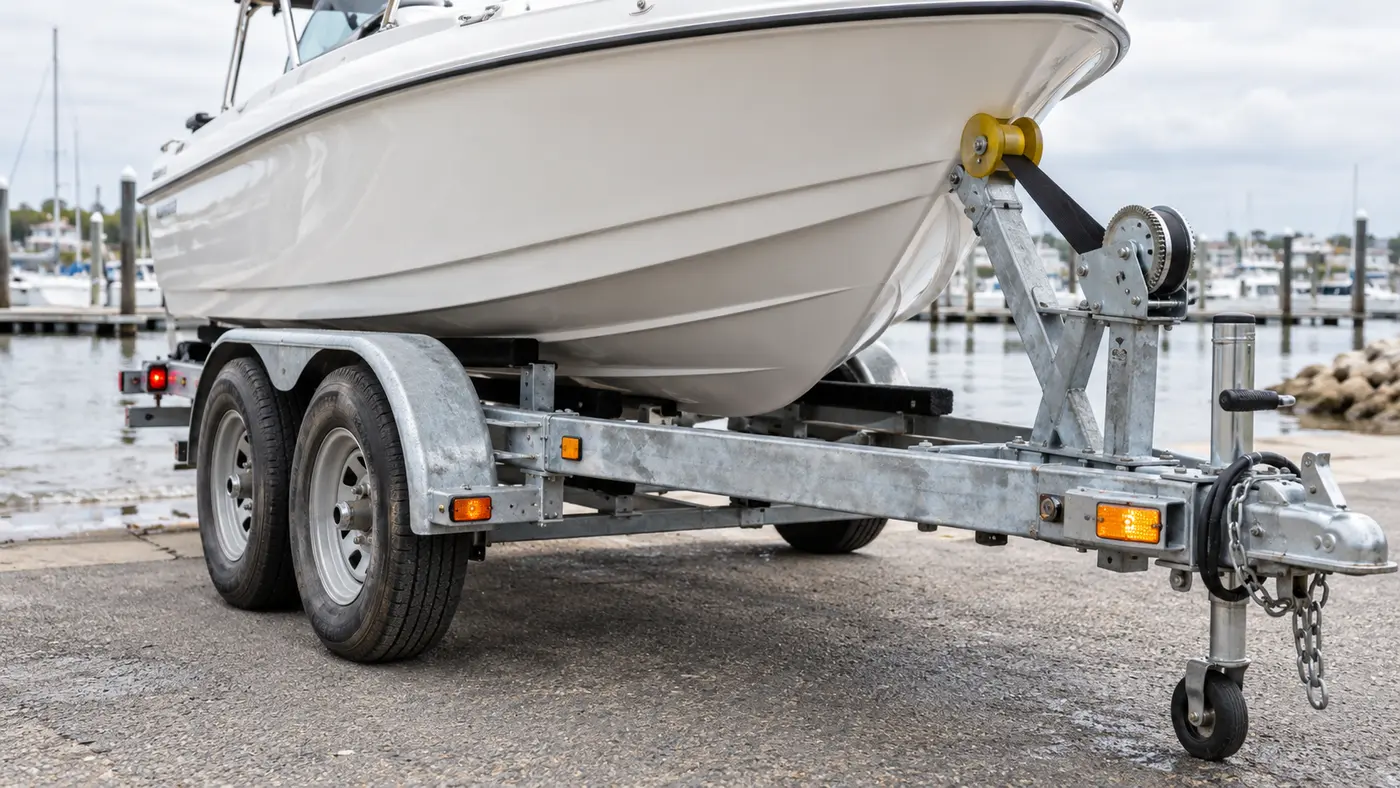
The trailer carries a heavy load at road speed, is repeatedly immersed and often sits for long periods. Give it its own schedule. Use the dedicated boat trailer maintenance checklist for tires, bearings, brakes, lights, coupling hardware, supports and corrosion control.
- Before towing, check cold tire pressure using the trailer label and tire requirements; inspect tread, sidewalls and tire age.
- Confirm the coupler is latched, safety chains are secured and the breakaway system is connected when fitted.
- Test running, brake and turn-signal lights every time the trailer is connected.
- Inspect the winch strap, bow stop, safety chain, bunks or rollers and transom tie-downs.
- Check bearings, seals, brakes, brake fluid and suspension at the maker’s intervals and after signs of overheating or water entry.
- Rinse as recommended after saltwater immersion and address corrosion before it affects strength.
- Carry a correctly sized spare, jack and tools capable of handling the loaded trailer.
Saltwater versus freshwater maintenance
Saltwater use typically increases rinsing, flushing and corrosion inspection. Follow the boat and engine instructions for freshwater flushing and approved corrosion protection. Freshwater is not maintenance-free: mud, algae, vegetation, minerals and shallow-water debris can block intakes or cling to the hull and trailer.
Keep a maintenance log that is useful
A log should answer four questions: What was checked? What was found? What was done? When is it due again?
- Date and engine hours
- Inspection or service performed
- Condition found, including photos
- Parts, filters, fluids and specifications used
- Technician, shop and receipt number
- Next due date and hour threshold
Keep receipts and serial numbers with the log. Good records support troubleshooting, warranty discussions, budgeting and a future sale—but their main value is preventing maintenance from depending on memory.
Seven mistakes to avoid
- Using one universal schedule. Boat systems have different intervals.
- Servicing by hours only. Time-based maintenance still applies.
- Replacing parts before diagnosing. A new battery cannot fix a parasitic load.
- Ignoring small changes. New odors, vibration, water stains or hot connections are evidence.
- Using automotive substitutes without approval. Marine specifications can differ.
- Sealing in moisture. A clean boat can still develop mildew or corrosion.
- Forgetting the trailer. The boat may be ready while the trailer is not.
When to call a professional
Arrange qualified help for fuel leaks or strong fuel odor, repeated electrical protection trips, melted wiring, steering play, overheating, structural cracks, soft decks, significant corrosion, contaminated gear lubricant, unexplained bilge water or any procedure requiring specialized tools and measurements.
Ask for a written scope tied to engine hours, the model-specific schedule and inspection findings. Request documentation of replaced parts and newly discovered problems.
Frequently asked questions
How often should a boat be serviced?
Use the exact engine, drive and boat manufacturer schedules. Service is commonly triggered by both time and operating hours, so complete whichever interval comes first.
What maintenance should be done after every boat trip?
Look for new damage or leaks, remove trash, dry wet compartments, record problems and follow the manufacturer’s flushing and cleaning instructions.
What is included in annual boat maintenance?
It may include engine and drive service, fuel and cooling-system inspection, battery testing, steering checks, hull inspection, safety-equipment review and trailer service.
Can I do boat maintenance myself?
Owners can often handle cleaning, visual inspections and simple manual-approved tasks. Fuel, major electrical, steering and structural work may require a qualified professional.
How do I keep a boat maintenance log?
Record the date, engine hours, work performed, parts and fluids used, findings, receipts and the next due date or hour mark.
Does a freshwater boat need less maintenance?
Freshwater usually creates less salt-related corrosion, but it does not eliminate engine, battery, hull, safety-equipment or trailer maintenance.
Sources and editorial basis
This guide defers exact procedures and intervals to equipment manufacturers. Key references:
- Mercury Marine: Owner’s Manuals
- Mercury Marine: Maintenance Made Easy
- U.S. Coast Guard: Recreational Boaters
- U.S. Coast Guard Boating Safety App
- Discover Boating: Boat Maintenance
- Discover Boating: Trailer Maintenance