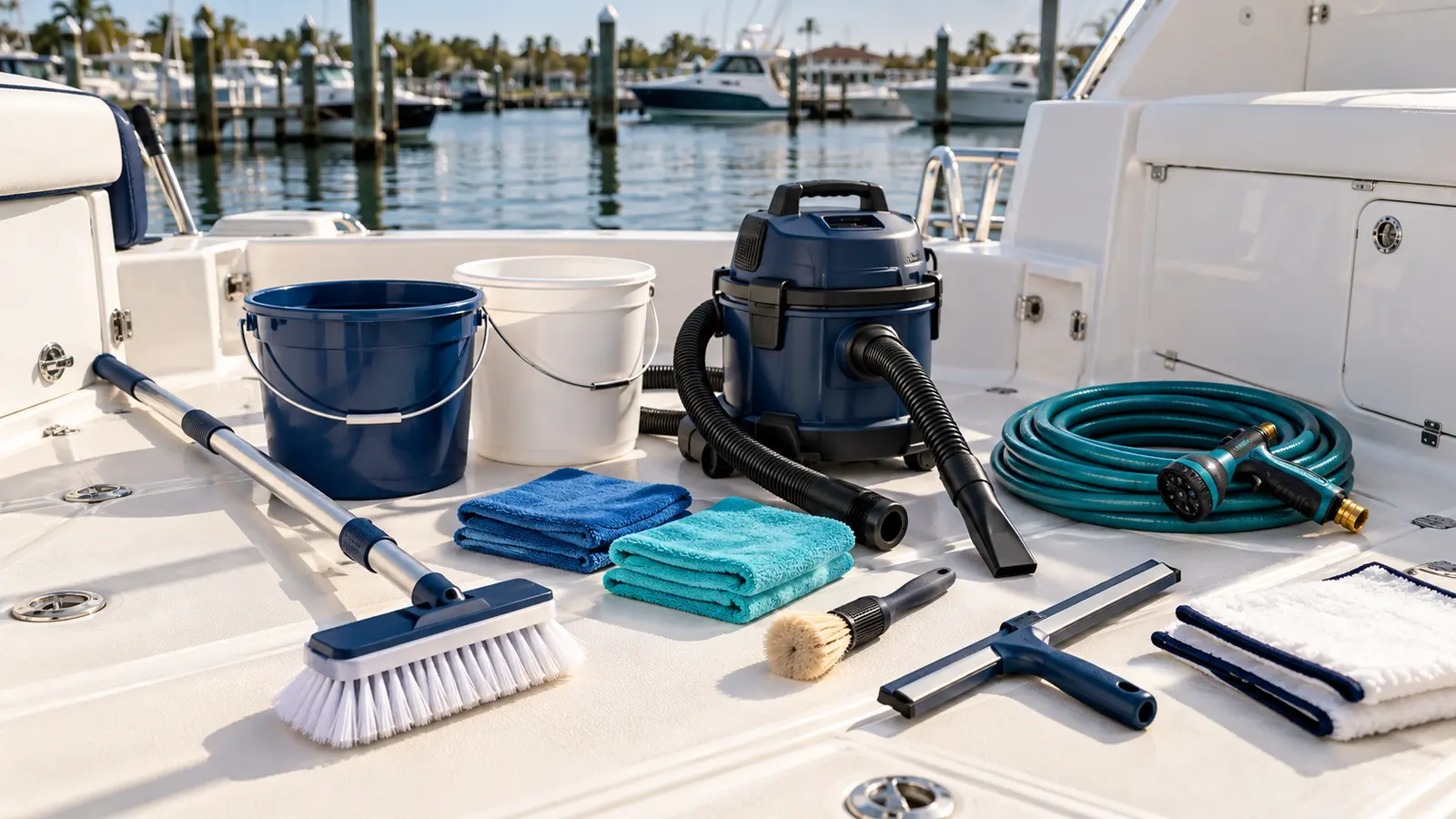
Editorial image of a generic boat-cleaning setup. Follow the exact boat, surface and equipment instructions before using any tool.
Most owners need eight types of boat cleaning tools: a soft wash brush, a smaller detailing brush, color-coded microfiber cloths, absorbent drying towels, a hose with a shutoff nozzle, two buckets, absorbent pads and a suitable vacuum. The best boat cleaning tools are the ones matched to a known surface, not the largest bundle. Keep one clean set for glass and finished surfaces, a separate set for decks and dirty work, and add specialty tools only when the boat or material manufacturer approves them.
Use those eight items as the core boat washing supplies, then add cleaners only after checking the instructions for the boat's actual gelcoat, paint, vinyl, fabric, glazing and flooring.
The practical eight-piece boat cleaner kit
- Soft wash brush: a flagged or otherwise surface-safe head for smooth gelcoat, painted surfaces and broad rinsable areas.
- Separate deck brush: a firmer head only for compatible non-skid or textured flooring.
- Detailing brush: a small soft brush for seams, tracks and hardware edges.
- Color-coded microfiber cloths: separate clean, glass, interior and dirty-work sets.
- Absorbent drying towels: enough to dry seams, compartments and hardware instead of spreading residue.
- Hose and shutoff nozzle: controllable low-pressure flow for rinsing without flooding openings.
- Two buckets: one for clean solution and one for rinsing dirty tools.
- Suitable vacuum and absorbent pads: dry debris removal, controlled extraction and spill containment for the correct environment.
Match the tool to the boat surface
No single brush or cloth is safe everywhere. The finish maker's instructions decide what is compatible, and a hidden-area test is still useful when those instructions allow a product or tool.
| Surface or job | Start with | Keep away unless approved |
|---|---|---|
| Smooth gelcoat or painted topsides | Clean soft-bristle wash brush, microfiber wash pad, low-pressure rinse | Stiff bristles, abrasive pads, dirty brush heads and high pressure |
| Molded non-skid | Dedicated medium brush if the boat maker permits it | Metal brushes, pumice, aggressive rotary brushes and cross-use on gloss surfaces |
| Marine vinyl | Soft cloth or very soft brush with a compatible cleaner | Stiff bristles, hard scrub pads and saturated seams |
| Fabric or canvas | Vacuum, sponge or soft brush specified by the fabric maker | Universal stain tools, hot extraction and hard brushing |
| Acrylic or polycarbonate glazing | Clean water and a dedicated soft cloth approved for the glazing | Dry rubbing, paper towels, dirty microfiber and abrasive squeegee blades |
| Glass | Clean glass-only cloth and a clean soft squeegee when compatible | Using the same cloth that touched wax, grease or deck dirt |
| Carpet and woven flooring | Dry vacuum first, then an approved spot or extraction method | Flooding the backing or using a rotary brush without approval |
| Bilge or oily compartment | Oil-compatible absorbent pads and dedicated tools | Moving contaminated tools into the cabin or discharging dirty water |
Sea Ray's current owner guidance recommends mild soaps and soft-bristle brushes for most cleaning, and warns against high-pressure washing around surfaces that can be damaged. That is a sound starting point, but the manual for the exact boat still controls.
Choose brushes by stiffness, shape and reach
One soft head for smooth finishes
A large soft wash head covers topsides and broad deck areas without concentrating pressure at one point. Look for bristles that stay soft when wet, a head with protected edges, and a secure connection to the handle. Rinse the head before it touches the boat because trapped sand turns any soft brush into an abrasive.
A separate head for non-skid
Textured deck can hold soil below the reach of a soft wash head. Use a different, clearly labeled brush only if the deck maker permits the stiffness. A firmer brush that is useful on non-skid should never migrate to glossy gelcoat, clear plastic or vinyl.
A small brush for seams and hardware
A compact detailing brush helps around hatch channels, fastener heads and upholstery piping. Choose a smooth handle and soft tip. Do not insert it into switchgear, electronics, vents, fuel-system openings or damaged sealant. Cleaning cannot repair a failed seal or loose fitting.
A pole that stays under control
A telescoping pole reduces overreaching, but the lock must hold and the head must stay flat against the surface. Work from a stable position. Never lean over a rail or step onto a wet gunwale to gain reach. A shorter fixed handle is often better inside the cockpit.
Use microfiber as a system, not one reusable rag
Microfiber is useful because it can lift fine debris and spread less liquid than a saturated sponge, but only when it is clean. Color-code cloths by job. Reserve the cleanest set for glazing and screens, another for interior finishes, another for exterior wash work, and a final set for grease or bilge-adjacent tasks.
- Inspect every cloth for grit, hook-and-loop fasteners and hardened residue before use.
- Fold a cloth into clean faces and change it before dirt is dragged across the surface.
- Do not dry-rub acrylic or polycarbonate. Rinse loose grit and follow the glazing maker's method.
- Wash cloths separately from lint-heavy cotton and contaminated shop rags.
- Retire cloths that stay oily, stiff or loaded with particles.
Keep absorbent drying towels separate from wash cloths. Drying is part of cleaning because trapped water at seams, under cushions and inside lockers encourages odor, mildew and corrosion.

Better Boat Boat Scuff Erasers, 3-Pack
Useful for: localized scuffs on a compatible surface after loose grit is removed and a hidden-area test looks acceptable.
Limitation: the manufacturer identifies the foam as micro-abrasive. It is not a universal wash tool and may be wrong for delicate coatings, polished gloss, screens or unknown materials.
Go to review pageThe review covers the verified three-pack identity, water-activated use and surface cautions.Control water with the hose, nozzle and buckets
A garden hose with a positive shutoff nozzle is more useful than maximum pressure. It lets you wet and rinse one area without leaving water running while you move around the boat. Check the hose fittings for metal edges that could strike the finish, and route the hose so it cannot pull a tool, create a trip hazard or rub across a corner.
Use two buckets when the surface and cleaning directions allow it. One holds the clean solution and the other rinses the brush or wash pad. Dirty rinse water should not be poured into the marina basin or onto a storm drain. The EPA identifies vessel cleaning and washwater as potential sources of marina pollution, so use the designated wash area and follow local and marina rules.
Pick the right vacuum for dry debris and controlled extraction
Vacuum dry sand, hair and crumbs before they become wet paste. A soft brush attachment and narrow crevice tool handle most interior work. Inspect the nozzle for sharp edges and keep suction from pulling loose headliner, carpet edges, labels or wiring.
A wet and dry vacuum can remove compatible washwater or extract a cleaned carpet only when the machine, location and method are suitable. Do not use a consumer vacuum where fuel vapor, solvent vapor or another flammable atmosphere may be present. Stop immediately if you smell fuel. Ventilate and follow the boat's fuel and electrical safety procedures instead of switching equipment on.
Empty and clean the vacuum before moving from a contaminated zone to the cabin. A machine used for oily bilge material should not become the upholstery vacuum. Use the separate boat bilge cleaning guide for containment and disposal.
Optional tools that solve a specific problem
| Optional tool | When it helps | Why it may not belong in every kit |
|---|---|---|
| Soft squeegee | Compatible glass and broad smooth panels | A dirty or damaged blade can drag grit or mark plastic glazing |
| Hand pump sprayer | Controlled application of a compatible diluted product | It encourages overspray and cross-contamination if not dedicated and labeled |
| Extractor | Manufacturer-approved carpet or upholstery cleaning | Heat, chemistry and excess water can damage backing, foam or adhesive |
| Rotary brush attachment | A specific durable texture with maker approval | Speed and pressure can change gloss, damage coating or catch an edge |
| Plastic scraper | One documented residue-removal task | Even plastic can scratch clear surfaces and soft finishes |
| Water-activated scuff eraser | Localized transfer or marks on compatible materials | Micro-abrasion makes it a spot tool, not a whole-surface cleaner |
Tools to skip or restrict
- Wire brushes and metal scrapers: they can scratch finishes, damage protective coatings and leave corrosion-prone contamination.
- Household abrasive pads: color does not reliably identify aggressiveness. Use only a grade documented for the exact surface.
- Paper towels on clear plastic: follow the window maker's cleaning method and use a dedicated soft cloth when specified.
- Dirty communal sponges: they move grease, salt and grit from one material to another.
- Uncontrolled pressure nozzles: more force is not a substitute for compatible chemistry and dwell time.
- Steamers and hot extractors: heat can affect adhesives, coatings, vinyl and fabric treatments unless expressly approved.
- Air compressors around electronics: compressed air can drive debris or moisture into openings and may exceed equipment instructions.
Build the kit around your boat
Open fiberglass runabout
Prioritize a soft pole brush, separate non-skid brush, microfiber sets, hose nozzle, buckets and drying towels. Add a small vinyl brush only if the upholstery maker allows it. The whole-boat cleaning sequence explains when each tool enters the wash process.
Pontoon
Add a long-reach soft brush and a separate tool for compatible deck texture. Do not use the deck tool on aluminum fencing, graphics or vinyl. Inspect the pole lock and work from a stable position rather than reaching outside the rails.
Cuddy cabin or cruiser
Keep an interior-only vacuum, soft attachments, glass-only cloths and absorbent towels aboard. Add a compact detail brush for tracks and lockers. Use the surface-by-surface interior guide to separate glazing, fabric, vinyl, cabinetry and electronics.
Fishing boat
Use dedicated tools for bait residue, fish boxes and general deck work, and keep them away from cabin cloths and food-contact gear. A narrow brush can reach drains, but it should not enter pumps or electrical openings. Clean and dry livewell equipment according to its manufacturer.
Store and replace cleaning supplies before they cause damage
Rinse reusable tools until the runoff is clear, then dry them before closing the locker. Hang brush heads so bristles are not crushed. Keep microfiber in breathable labeled bags only after it is fully dry. Store chemicals upright, secured and separated according to their labels. Never use a drink bottle for cleaner.
Replace a brush when bristles split, harden or trap particles. Replace a squeegee blade when it nicks or streaks. Retire a cloth that remains greasy or stiff after washing. Check vacuum hoses and electrical cords for damage. Record the kit inspection in the boat maintenance checklist.
Read the Better Boat Scuff Erasers review
Use the review to verify the product identity, manufacturer directions and material cautions. Keep it in the specialty section of the kit, not beside general wash cloths as an all-purpose cleaner.
Go to review pageBoat cleaning tool checklist
- Each brush is labeled for one surface group and has clean, undamaged bristles.
- Glass, interior, exterior and dirty-work microfiber sets stay separate.
- The hose nozzle shuts off positively and the fittings cannot strike the finish.
- Two buckets keep clean solution apart from dirty rinse water.
- The vacuum and attachments are suitable for the material and environment.
- Absorbent pads are available for oil or spills, with a disposal plan.
- Every chemical remains in its original labeled container.
- Optional abrasive, powered or heated tools have explicit surface approval.
- All equipment is rinsed, dried and stored without blocking safety gear.
For product-specific cleaning methods, continue with the vinyl seat guide or browse the source-checked Cleaning & Care reviews.
Boat cleaning tool questions
What tools do I need to clean a boat?
Start with a soft wash brush, smaller detailing brush, color-coded microfiber cloths, drying towels, a hose with a shutoff nozzle, two buckets, absorbent pads and a suitable vacuum. Add specialty tools only for surfaces their manufacturers identify as compatible.
What kind of brush is safe for a boat?
Use the softest brush that removes the soil without changing gloss or texture. A soft flagged brush is a safer starting point for smooth finishes, while non-skid may need a separate medium brush if the boat maker permits it. Test an inconspicuous area first.
Are microfiber cloths safe for boat surfaces?
Clean microfiber is useful on many boat surfaces, but the surface maker still controls the method. Use separate cloths for windows, finishes and dirty work, remove embedded grit, and never dry-rub plastic glazing.
Do I need a pressure washer to clean a boat?
Usually not. A hose, compatible cleaner and suitable brush cover most routine cleaning. High pressure can damage seals, decals, aging finishes, soft materials and electrical components unless the manufacturer expressly allows it.
What should go in a boat cleaner kit?
Pack a labeled brush for each surface group, clean microfiber cloths, absorbent towels, two buckets, a shutoff nozzle, a compatible vacuum, absorbent pads and only the cleaners approved for the boat's actual materials. Keep dirty and clean tools separated.
Sources and editorial method
BoatOwner Hub checked manufacturer and U.S. environmental guidance on October 7, 2026. The exact boat, finish, fabric, glazing and equipment instructions take priority over this general buying guide. Product placement is limited to one relevant published review, with no claim of hands-on testing, price, rating or performance.
- U.S. EPA: Nonpoint Source, Marinas and Boating
- Sea Ray: Cleaning, Maintenance and Seasonal Preparations
- Sunbrella: How to Clean Marine Upholstery
- Better Boat: Boat Scuff Erasers manufacturer information