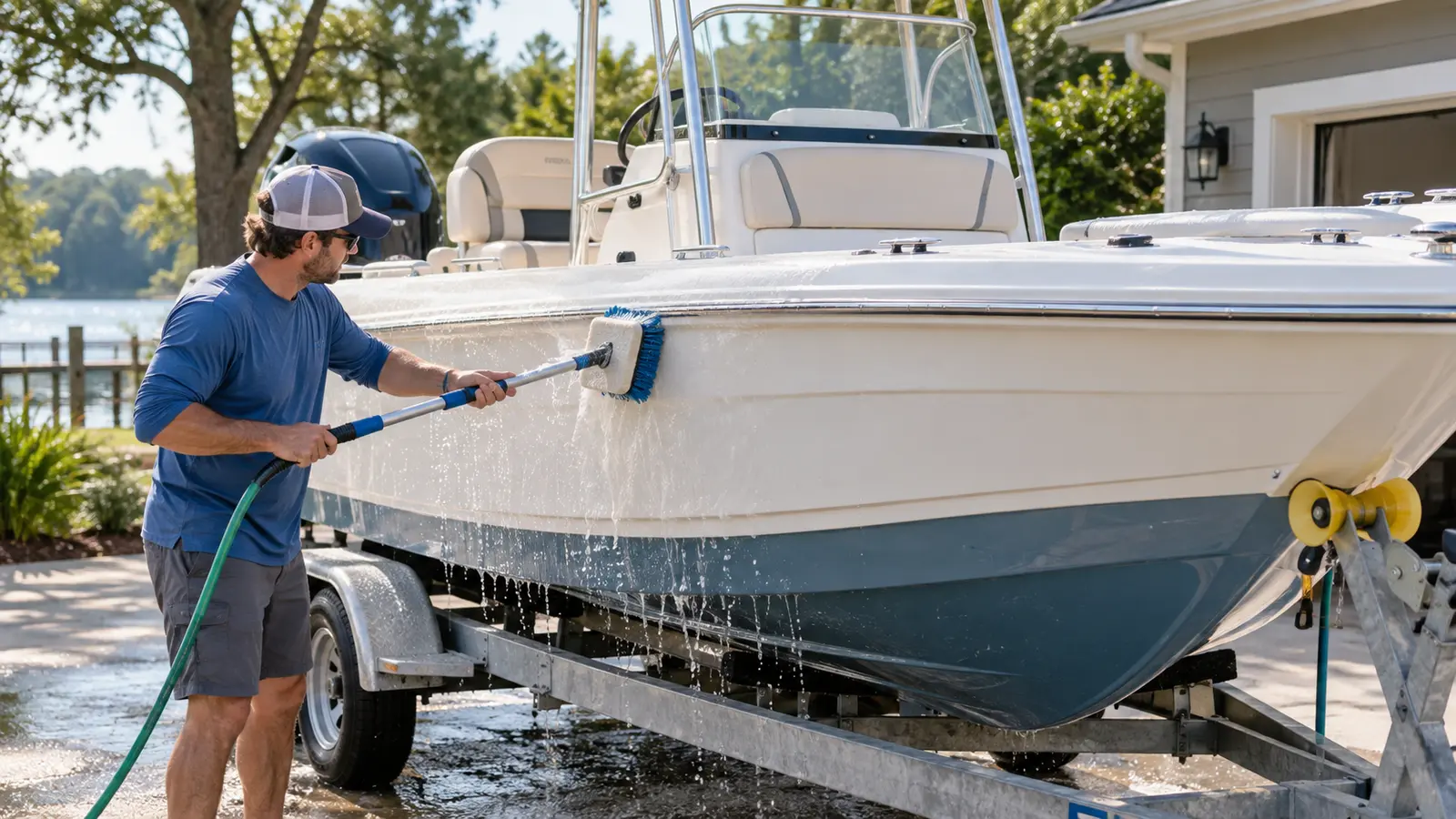
The best way to clean a boat is to remove loose grit first, rinse with low-pressure fresh water, wash from the top down with a mild cleaner approved for each material, rinse before the solution dries, and dry the boat before closing compartments or fitting the cover. Stronger chemicals and more pressure are not shortcuts when the boat contains gelcoat, vinyl, acrylic, glass, rubber, sealants, metal and electronics.
Quick answer: How do you clean a boat safely?
Work in shade on a cool surface. Secure the boat, close fuel and electrical openings as the manual directs, remove loose gear and collect debris. Pre-rinse, then clean small sections with the least aggressive approved product and a soft tool. Keep spray away from vents, seals, screens, switches and upholstery seams. Rinse thoroughly, dry hidden edges and compartments, and inspect the finish before applying any protectant.
Prepare the boat and the work area
A safe boat wash begins before the hose is turned on. Park a trailered boat on level ground, chock it and keep the drain arrangement exactly as the builder requires. At a marina, use the designated wash area and follow local restrictions. Remove trash, fishing line, loose paint and absorbable spills first so they can be disposed of correctly instead of washed overboard.
- Move cushions, electronics, paper charts and loose gear to a dry place.
- Close hatches, ports and compartments that should not receive spray.
- Check the bilge for fuel or oil before draining or washing. Use the dedicated boat bilge cleaning guide before disturbing contaminated liquid.
- Work out of direct sun so soap does not bake onto the finish.
- Use a drop cloth or runoff control where local rules or the job require it.
- Keep separate cloths and brushes for the hull, upholstery, glass and oily areas.
The U.S. Environmental Protection Agency identifies boat cleaning and hull-maintenance runoff as potential marina pollution sources. Clean away from the water when practical, capture solid debris and choose the least toxic effective product permitted for the job.
Before assembling supplies, use the boat cleaning tools guide to separate brushes, microfiber, hose gear and vacuum attachments by surface.
Use a simple, surface-safe cleaning kit
Most routine boat cleaning does not need a shelf of aggressive products. A small kit makes it easier to avoid cross-contamination and accidental surface damage.
| Supply | Useful for | Important limit |
|---|---|---|
| Low-pressure fresh water | Pre-rinsing salt, dust and loose residue | Do not direct water into vents, air intakes, seals, electronics or unapproved openings. |
| Mild marine cleaner | Routine hull and deck washing when approved | Check material compatibility and label dilution. More concentrate is not automatically better. |
| Soft wash mitt and microfiber cloths | Smooth gelcoat, glass and finished surfaces | Keep grit out of the cloth and use separate cloths for oily areas. |
| Soft-bristle brush | Textured nonskid and large washable areas | Use the stiffness and pressure allowed by the surface maker. |
| Bucket with grit separation | Keeping dirty water away from the wash tool | Replace dirty water rather than spreading sand and salt. |
| Dry towels or chamois | Drying hardware, glass, seams and edges | Do not put oily towels back into the clean-wash kit. |
Sea Ray recommends mild soap and soft-bristle brushes for most cleaning work and warns that harsh, abrasive products can damage gelcoat and vinyl. Yamaha likewise advises fresh water, a soft cloth and a mild cleaning agent for routine exterior care.
How to Wash a Boat in 6 Steps
If you are learning how to wash a boat, work from the least aggressive method upward. Start with fresh water and boat soap, then use a surface-specific cleaner only where the basic wash does not solve the problem.
1. Remove loose dirt before scrubbing
Lift leaves, sand, scales, crumbs and other debris by hand, with a soft brush or with an appropriate vacuum attachment. Pay attention to tracks, scuppers and the spaces beneath removable cushions. Scrubbing grit across a finish turns a cleaning job into abrasion.
2. Rinse from the top down
Use low-pressure fresh water to loosen salt and surface dirt. Start at the highest washable area and let contamination move toward the drains. Do not blast directly into helm electronics, speakers, engine air intakes, fuel vents, window seals, upholstery seams or trailer hubs. Sea Ray specifically advises against high-pressure washing because it can cause damage.
3. Wash one manageable section at a time
Dilute the approved cleaner exactly as labeled. Load a clean wash mitt or soft brush, then work from cleaner areas toward dirtier ones. Use straight, overlapping passes with light pressure. Frequently rinse the tool and replace cloudy bucket water. One of the most useful boat cleaning tips is to separate the hull-side tool from the deck tool, where grit and fish residue are more likely to collect.
4. Rinse before cleaner dries
Do not soap the entire boat and walk away. Rinse each section while it is still wet, including hardware edges, rub rails, drains and the lower side of fittings where residue can collect. Cleaner left on the surface may streak, attract soil or continue acting on a coating.
5. Dry visible and hidden areas
Dry glass, polished metal, gelcoat and seams with clean towels. Open permitted compartments so trapped moisture can escape. Stand removable cushions only as the builder allows and make sure the underside is dry. Sea Ray warns that putting a tight cover over a wet interior can trap moisture and create additional problems.
6. Inspect before using protectants
Look at the dry finish in even light. If a mark remains, identify the surface and the contamination before choosing a stronger method. Wax, polish, corrosion inhibitor and vinyl protectant are separate jobs with separate compatibility rules. Do not apply a product just because it creates shine.
Match the method to the surface
| Area | Routine approach | Avoid |
|---|---|---|
| Gelcoat and painted hull | Rinse grit, use an approved mild wash and soft mitt, then dry. Treat oxidation separately. | Abrasive powders, dirty brushes, unapproved acids and high pressure near decals or fittings. |
| Nonskid deck | Use the approved cleaner and a soft brush that reaches the texture without excessive force. | Stiff wire brushes, slippery dressings and forcing water into hardware or hatches. |
| Marine vinyl | Remove grit, use the upholstery maker's mild method, rinse the cloth and dry seams completely. | Universal bleach recipes, solvents, abrasive pads and soaking cushion foam. See the vinyl-seat cleaning guide. |
| Acrylic or polycarbonate windows | Rinse dust first and use the exact cleaner and soft cloth approved by the window maker. | Household glass cleaner, ammonia, paper towels and dry wiping unless specifically allowed. |
| Glass windshields | Use a clean, compatible glass method without spraying nearby electronics or seals. | Letting overspray reach acrylic panels, displays or upholstery. |
| Stainless and aluminum | Wash salt away, rinse completely and use a compatible metal-care product only when needed. | Steel wool, chloride residue and mixing metal cleaners between dissimilar surfaces. |
| Outboard exterior | Follow the engine manual. Yamaha recommends fresh water, a soft cloth and a mild cleaner for the exterior. | Spraying into the air intake, seals or electrical openings and using aggressive degreasers without approval. |
| Bilge and machinery spaces | Inspect for fuel and oil first. Use marine-grade products and collect contaminated residue correctly. | Pumping oily water overboard, mixing chemicals or washing an unexplained leak away. |
Clean promptly after saltwater and fishing trips
Saltwater, bait, fish blood, sunscreen and food become harder to remove as they dry. Yamaha recommends rinsing or wiping spills before they set. After a saltwater trip, rinse the hull, deck, hardware, trailer and the engine exterior as their manuals direct. Flush the engine cooling system only with the exact procedure for that engine.
Do not let urgency turn into careless pressure washing. Use fresh water and time to dissolve salt, then wash gently. Check scuppers, anchor lockers, rod holders, cooler drains and the areas beneath removable deck pieces. Dry fishing gear separately so it does not return salt and odor to a clean compartment.
Boat Cleaning Tips: Mistakes to Avoid
- Using one strong cleaner everywhere: boats contain several materials that may need different chemistry.
- Washing in hot direct sun: cleaner can dry before it is rinsed and leave streaks or residue.
- Using a dirty brush: trapped grit can scratch gelcoat, glass, acrylic and finished metal.
- Pressure washing seals and upholstery: water can be driven into places that are difficult to dry.
- Ignoring runoff: detergents, oil, fuel and solid debris should not be washed into marina water.
- Covering the boat while damp: trapped moisture supports odor, staining and mildew.
- Polishing before the surface is clean: rubbing contamination into the finish creates more work.
- Mixing products: incompatible cleaners can create toxic gas or unpredictable surface damage.
A verified option for localized scuffs

Better Boat Scuff Erasers, 3-Pack
Useful for: controlled spot cleaning of localized marks with water after loose grit is removed and a hidden area is tested.
Limitation: the foam is micro-abrasive. It can dull or alter a sensitive finish and should not replace the routine whole-boat wash method or the surface manufacturer's care instructions.
Read the complete reviewThe review covers directions, stated surface uses, finish cautions and the exact three-pack identity.Finish the job before storing the boat
Walk through the boat after the final rinse. Check under cushions, inside storage wells, around cup holders and along hatch channels. For cabin, cockpit and helm materials, continue with the surface-by-surface boat interior cleaning guide. Remove wet towels and cleaning tools. Leave only the ventilation arrangement approved for the boat and storage location, and do not close the cover until the interior is dry.
Add washing and drying to the boat maintenance checklist. For longer layups, use the covers and storage guide to plan drainage, support and airflow. Cleaning is complete only when the water and residue are gone and the boat is ready to dry safely.
Whole-boat cleaning checklist
- ☐ Read the relevant boat and material care instructions.
- ☐ Secure the boat and prepare a legal runoff-control area.
- ☐ Remove loose gear, trash, grit and absorbable spills.
- ☐ Work in shade on cool surfaces.
- ☐ Rinse with low-pressure fresh water from the top down.
- ☐ Wash small sections with approved cleaner and soft tools.
- ☐ Keep spray away from vents, seals, electronics and upholstery seams.
- ☐ Rinse every section before cleaner dries.
- ☐ Dry surfaces, seams, compartments and cushion undersides.
- ☐ Inspect the dry finish before spot treatment or protection.
- ☐ Store clean tools separately from oily or contaminated cloths.
- ☐ Fit the cover only after the boat is dry and ventilated.
Frequently asked questions
What should I use to wash a boat?
Start with clean water, a mild cleaner approved for the exact surface, clean microfiber cloths, a soft wash mitt and a soft-bristle brush. The boat and material manufacturers' care instructions take priority.
Can I use household dish soap on a boat?
Do not assume it is safe. Some household detergents can remove wax or protective coatings and may not be suitable near the water. Use a cleaner approved by the boat or surface manufacturer and rinse it completely.
Should I pressure wash a boat?
A pressure washer can force water into seals, upholstery, bearings, vents and electrical areas or damage finishes and decals. Use low-pressure fresh water unless the manufacturer identifies a safe pressure-washing procedure for a specific surface.
How often should a boat be washed?
Rinse salt, fish residue, fuel spills and other contamination promptly. Many owners wash after each trip in saltwater and clean as needed in freshwater, but the correct routine depends on use, water conditions, storage and manufacturer guidance.
Sources and methodology
This guide uses current manufacturer guidance for routine cleaning and U.S. EPA information for pollution prevention. The instructions for the exact boat, engine and material take priority over this general sequence.
- Sea Ray: Cleaning, Maintenance and Seasonal Preparations
- Yamaha Outboards: Bow to Stern Cleaning Tips
- Yamaha Outboards: External Appearance Maintenance
- U.S. EPA: Nonpoint Source Pollution from Marinas and Boating