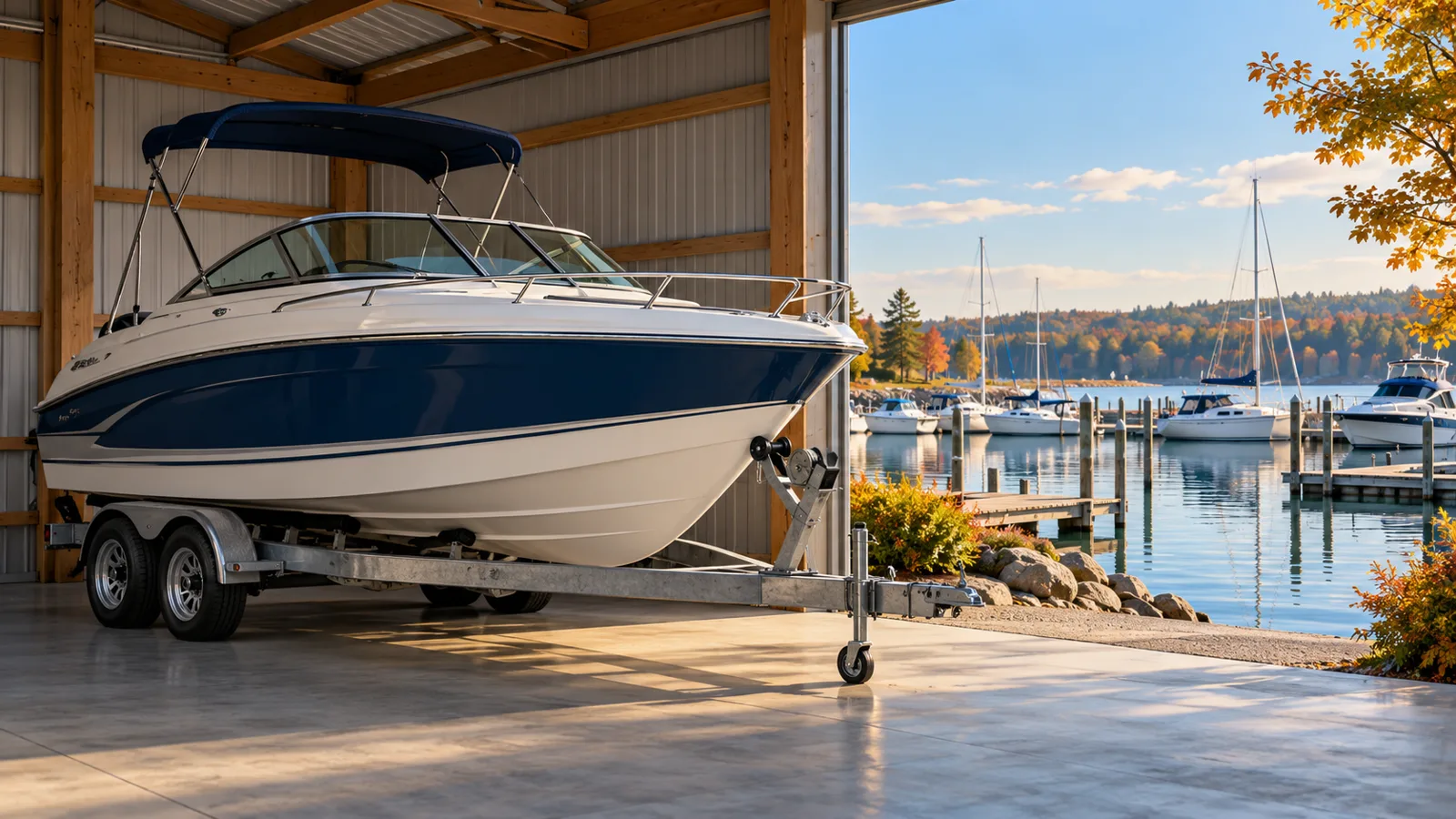
Editorial illustration of storage options, not a specific facility.
The best place to store a boat is the place that fits its full dimensions, protects it from the conditions it will face and lets you use it on your actual schedule. A driveway can work for a permitted trailerable boat. Indoor or covered storage can reduce weather exposure. Dry stack can suit owners who want staff-assisted launching, while a wet slip can suit frequent trips and boats that are difficult to trailer. Compare the whole arrangement, including access, handling, preparation and contract terms, before comparing the monthly rate.
Quick answer: Where should you store your boat?
Start with three questions: Will it fit? Can you reach the water when you want? Who will look after it while it sits? Eliminate locations that fail the boat's measurements, local permission or service requirements. Then request a written, all-in quote from two or three suitable options. For seasonal layup, choose a location and a boat-specific preparation plan together.
Compare six boat storage options
This is a decision framework, not a ranking of facilities. A clean, well-managed outdoor yard may serve your needs better than an indoor building with unsuitable access. Visit the exact space and ask the operator to confirm your boat and trailer in writing.
| Option | Useful when | Main tradeoff | Confirm first |
|---|---|---|---|
| Home driveway or yard | You have a trailerable boat and permitted space | You manage security, weather protection and launch trips | Local and HOA rules, turning room, surface and access |
| Outdoor storage yard | You need off-property space and can tow to a ramp | The boat remains exposed to the weather | Gate hours, allocated space, drainage and cover rules |
| Covered storage | A roof helps meet your protection needs | Open sides can still admit wind-driven weather | Actual roof clearance, exposure and trailer access |
| Enclosed indoor storage | You want a building around the boat during layup | Access and work may be restricted | Whether heating is included, door size and service policies |
| Dry-stack storage | Your boat qualifies for rack storage and staff launching | Launch timing and handling depend on the operator | Weight, hull support, dimensions and reservation rules |
| Wet slip | You use the boat often or trailering is impractical | The boat stays afloat and needs an active care plan | Berth fit, depth, utilities, inspections and storm arrangements |
Match the location to your boating routine
Deciding where to store a boat starts with the next season, not the listing photo. Write down how often you launch, your usual departure time, the months you use the boat and who can move it. Include the drive from home to storage and from storage to the ramp. A short advertised distance can conceal a slow towing route or a difficult turn.
For weekly trips, access restrictions deserve as much attention as weather protection. For several months without use, ask how the boat will be inspected and how you can arrange service. A storage solution that requires you to visit every week may be a poor fit when you live far away.
Before buying a boat, settle these constraints with the first-time boat buying checklist. Browse the Covers & Storage guides for preparation topics after choosing the location.
Two reviewed products for specific storage needs
Storage gear should follow the storage plan. The charger below applies only when the batteries are compatible and the location permits an appropriate powered installation. The fenders apply to a suitable dockside setup. Neither changes whether a facility is suitable for your boat.

NOCO GEN5X2 Marine Battery Charger
Fits: Two compatible 12-volt batteries and a location that permits properly installed onboard charging. NOCO specifies two independent banks at up to 5 amps each.
Check first: Battery chemistry, capacity, charge mode, installation requirements and the facility’s power policy. It is not a higher-output charger for rapid turnaround.
Go to review page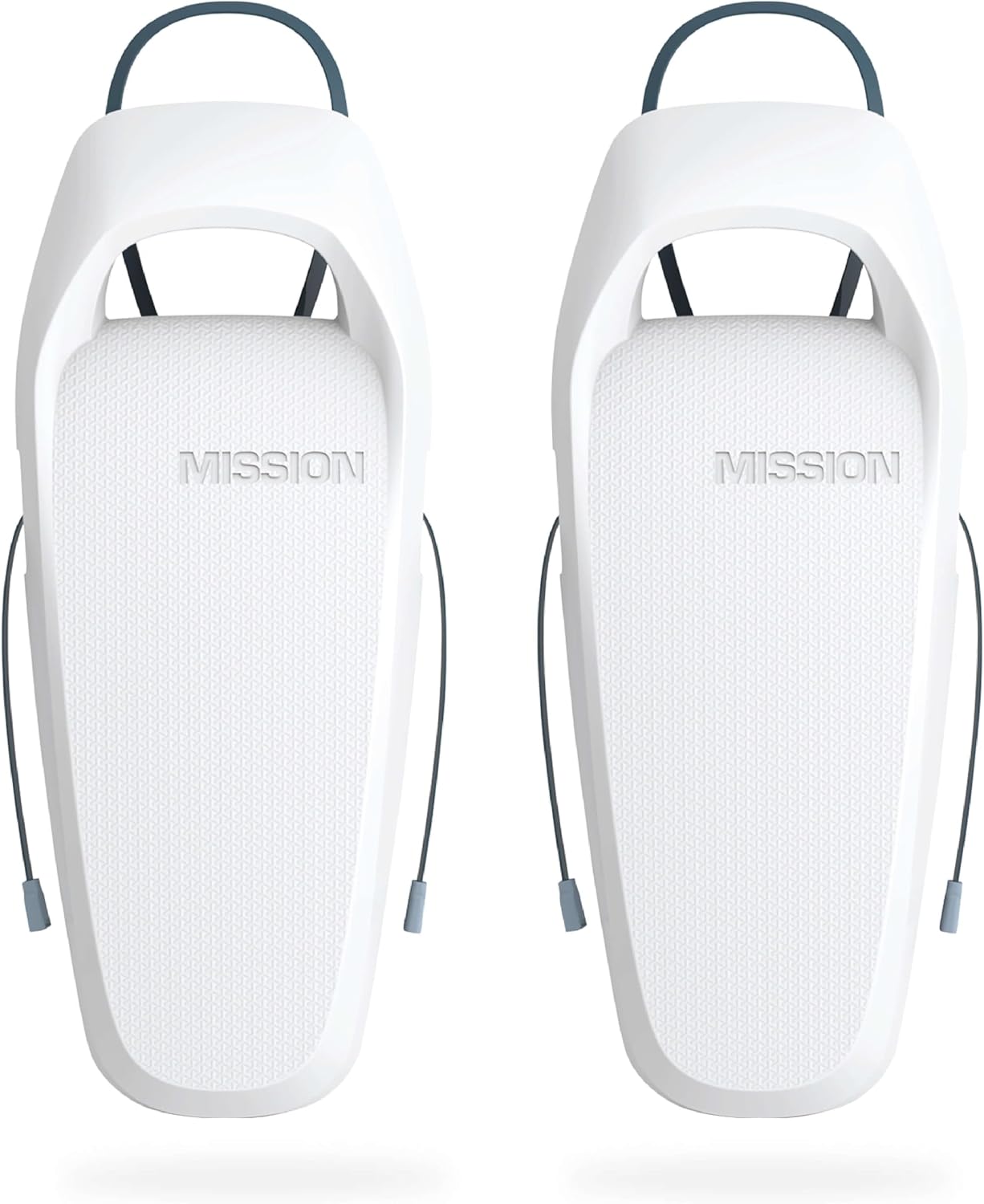
MISSION SENTRY 2.0 Boat Fenders
Fits: Suitable low-profile boats at a wet slip where the fender can be correctly positioned at the dock contact point. MISSION identifies runabouts, tow boats and fishing boats as intended applications.
Check first: Hull shape, attachment points, dock height and changing water levels. This is dock-contact protection, not a substitute for an appropriate mooring or storm plan.
Go to review pageHome storage: check permission and the complete trailer footprint
Keeping a boat at home gives you direct access to it, but an empty driveway is only the start of the check. Confirm municipal rules, lease restrictions and any homeowners association conditions before committing. Ask about screening, parking position, overnight limits and whether trailers are treated separately. Do not assume a neighbor's boat establishes permission.
Measure the package from trailer coupler to the furthest rear projection, not only the hull length. Include the trailer's widest points, outboard position, spare tire and any fixed equipment. Check gate openings and the path needed to reverse into the space. For a garage, measure the door opening as well as the interior.
Plan how the boat will remain supported and how rainwater will drain using the boat and trailer instructions. Avoid locations beneath vulnerable branches or roof edges that can shed snow. BoatUS's ashore storage guidance emphasizes hull support and site hazards. Use the trailer maintenance checklist before the next towing trip.
Outdoor and covered storage: inspect what the space actually protects
At an outdoor yard, inspect the assigned parking area instead of stopping at the office. Look at drainage, access lanes, nearby trees and the room available to maneuver your combination. Ask how the operator handles standing water, closed gates, snow removal where relevant and changes to the assigned space.
Covered storage usually means a roof rather than a fully enclosed room. Check which directions remain open and whether the roof covers the whole package. A taller boat may fit inside the bay but fail at the entrance, support beam or approach. Write the required clearances into the quote.
Ask whether the operator requires a cover and whether you can install, inspect or adjust it yourself. The correct cover must fit the boat and its use. A storage cover is not automatically approved for highway towing. Check the cover manufacturer's support, fastening and ventilation instructions rather than sealing the boat indiscriminately.
Indoor storage: enclosed does not automatically mean heated
Clarify whether the building is unheated, heated or maintained within a stated temperature range. If someone promises freeze protection, ask what the contract guarantees, what happens during a power outage and who remains responsible for preparing the boat. Do not skip boat-specific winterization because the sales description says “indoors.”
Ask whether your boat sits on its trailer or is handled by staff. Find out whether you can enter during storage, remove belongings, bring a technician or retrieve the boat early. A facility packed for seasonal layup may require notice and handling charges to reach your boat.
Confirm fuel, battery, charging and work rules. Indoor space is useful only if those requirements are compatible with the boat's needs. Have a qualified provider resolve any conflict between the facility's policy and the boat or equipment instructions before signing.
Dry stack: evaluate the launch service as well as the rack
Dry-stack storage keeps qualifying boats ashore on racks between outings, with staff moving them to and from the water. Ask the operator to accept the exact hull, engine arrangement, weight and dimensions. Do not treat a published maximum length as approval for every boat of that length.
Ask for the required launch notice, reservation method, operating hours, last return time and busy-weekend procedure. Find out whether launches are included, capped or separately charged. Clarify who secures the boat after launching, where you board it and what happens if you return after staff leave.
Confirm that the hull receives suitable support and that the lifting method fits the boat. BoatUS notes that racks designed for typical hulls may not suit unusual designs. For a pontoon or atypical hull, get explicit operator and manufacturer guidance instead of assuming it can use the same supports as a conventional powerboat.
West Marine's storage overview identifies dry-stack fit, launch scheduling and charging policies as useful comparison points. Ask about washing, maintenance access and trailer storage too; rack space does not necessarily include those services.
Owners choosing a wet slip should also use the boat-cover-at-the-dock checklist to plan ventilation, drainage and access to lines and fenders.
Wet-slip storage: make a plan for the boat while you are away
A wet slip can reduce the steps between arriving and getting underway. Check the berth's usable width and length, water depth through the conditions you expect, boarding arrangement and access to the marina. Ask the operator whether the boat's draft, propulsion and equipment fit the berth.
The boat remains afloat between trips, so define who checks lines, fenders, bilge conditions, onboard power and changes in water level. Ask what staff actually inspect, what they report and what remains your responsibility. Confirm local bottom-care and service requirements with the boat manufacturer and marina.
Discuss weather arrangements before the busy season. Ask about haul-out availability, notice deadlines and whether a berth contract includes any storm service. Fenders help manage suitable dock contact; they do not replace appropriate mooring, inspections or a storm plan. For extended cold-weather layup, compare a professional ashore arrangement rather than assuming an accessible slip is the right winter solution.
Compare the total written quote
When deciding where to store your boat, compare the same period and the same service scope. A monthly rate alone can hide the cost of getting into storage or using the boat. Request an itemized quote for the actual package, then add your own transport and access costs.
- Term: minimum commitment, deposits, taxes, renewal and cancellation conditions
- Handling: haul-out, blocking, rack movement, launch and early retrieval
- Preparation: required winterization, cleaning, cover work or shrink wrapping
- Access: launch allowances, appointment fees and trailer parking
- Utilities: power, water and whether charging is permitted
- Responsibility: insurance requirements, damage reporting and exclusions
For example, compare an outdoor yard plus your separate ramp and towing expenses with a dry-stack quote that includes a stated launch allowance. Ask both providers to price your actual expected use. Do not assign value to “unlimited launches” if the hours make most of your trips impossible.
Add the result to the ownership and maintenance budget. The fuel cost calculator can help estimate boat-trip fuel; tow-vehicle travel needs its own estimate. Our boating services directory can help you find candidates, but verify current availability and terms directly.
Questions to ask before handing over the boat
- Has the operator accepted the exact boat, engine, trailer and measured dimensions?
- What preparation is required, who performs it and how is completion documented?
- How is the hull supported or lifted, and who confirms that method is suitable?
- When can you enter, launch, work on or retrieve the boat?
- Are electrical connections and battery maintenance permitted under written rules?
- What security and inspection service is actually included?
- What happens during severe weather, outages or an unexpected closure?
- What insurance documents are required, and whose coverage applies to handling damage?
- How do you report damage, cancel, renew or arrange early collection?
- What is the complete charge for your chosen term and expected use?
Photograph the boat and trailer at handover, document existing damage and list keys or equipment left with the operator. Keep the signed agreement, preparation records and emergency contacts together. Ask your insurer to confirm the selected arrangement against your policy rather than assuming the storage operator's insurance protects your boat.
Choose the place first, then prepare for that place
Location and preparation solve different problems. Follow the boat, engine, battery and onboard-system manuals for the expected layup period and temperatures. Start with our winterization planning guide, then have the operator identify which tasks it includes and which you must arrange.
Clean and dry suitable surfaces before storage using the cleaning and care guides. Plan inspections during layup, not only collection day. For permitted charging, use the boat battery charging guide and the exact charger and battery instructions. A convenient outlet does not settle installation, chemistry or temperature limits.
Check these reviews after confirming the storage arrangement
If your plan includes permitted onboard charging or an appropriate wet slip, these same two reviews explain the equipment's fit and limitations. Choose the location on its merits before adding gear.
NOCO GEN5X2 Marine Battery Charger
Fits: Two compatible 12-volt batteries and a location that permits properly installed onboard charging. NOCO specifies two independent banks at up to 5 amps each.
Check first: Battery chemistry, capacity, charge mode, installation requirements and the facility’s power policy. It is not a higher-output charger for rapid turnaround.
Go to review pageMISSION SENTRY 2.0 Boat Fenders
Fits: Suitable low-profile boats at a wet slip where the fender can be correctly positioned at the dock contact point. MISSION identifies runabouts, tow boats and fishing boats as intended applications.
Check first: Hull shape, attachment points, dock height and changing water levels. This is dock-contact protection, not a substitute for an appropriate mooring or storm plan.
Go to review pageNeed a larger universal-style cover? Read the HAHASOLE 20-22 ft boat cover review for measurement, support and trailering limits.
Common boat storage questions
Where do you store a boat if you do not have a driveway?
Compare a boat-capable outdoor yard, covered or enclosed facility, suitable dry stack and marina slip. Eliminate options that cannot accept the boat's dimensions or meet your access needs. Request written quotes that include handling and required preparation.
Can you store a boat in a self-storage unit?
Only if the operator permits boat storage and the complete package fits the door, interior and approach. Confirm fuel, battery, charging and access rules. A unit's floor dimensions alone do not establish that you can maneuver the boat inside.
Is indoor storage always better than outdoor storage?
Indoor storage reduces direct weather exposure, but suitability also depends on hull support, building conditions, access, policies and cost. An unheated building does not remove the need to prepare vulnerable systems for freezing temperatures.
Is dry-stack storage the same as a wet slip?
No. In dry stack, the boat rests ashore on racks and staff launch it for use. In a wet slip, the boat remains afloat at its berth. Compare fit, launch timing, service rules and the care required between trips.
Sources and editorial method
BoatOwner Hub checked hull-support guidance against BoatUS, operational storage considerations against West Marine, and the two products against their manufacturers on October 4, 2026. The comparison worksheet and facility questions are editorial decision aids. We do not quote invented storage prices or claim to have inspected a facility or tested the products.
- BoatUS: Supporting and storing a boat ashore
- West Marine: Boat storage considerations
- NOCO: GEN5X2 specifications and charging modes
- MISSION: SENTRY fender fit guidance