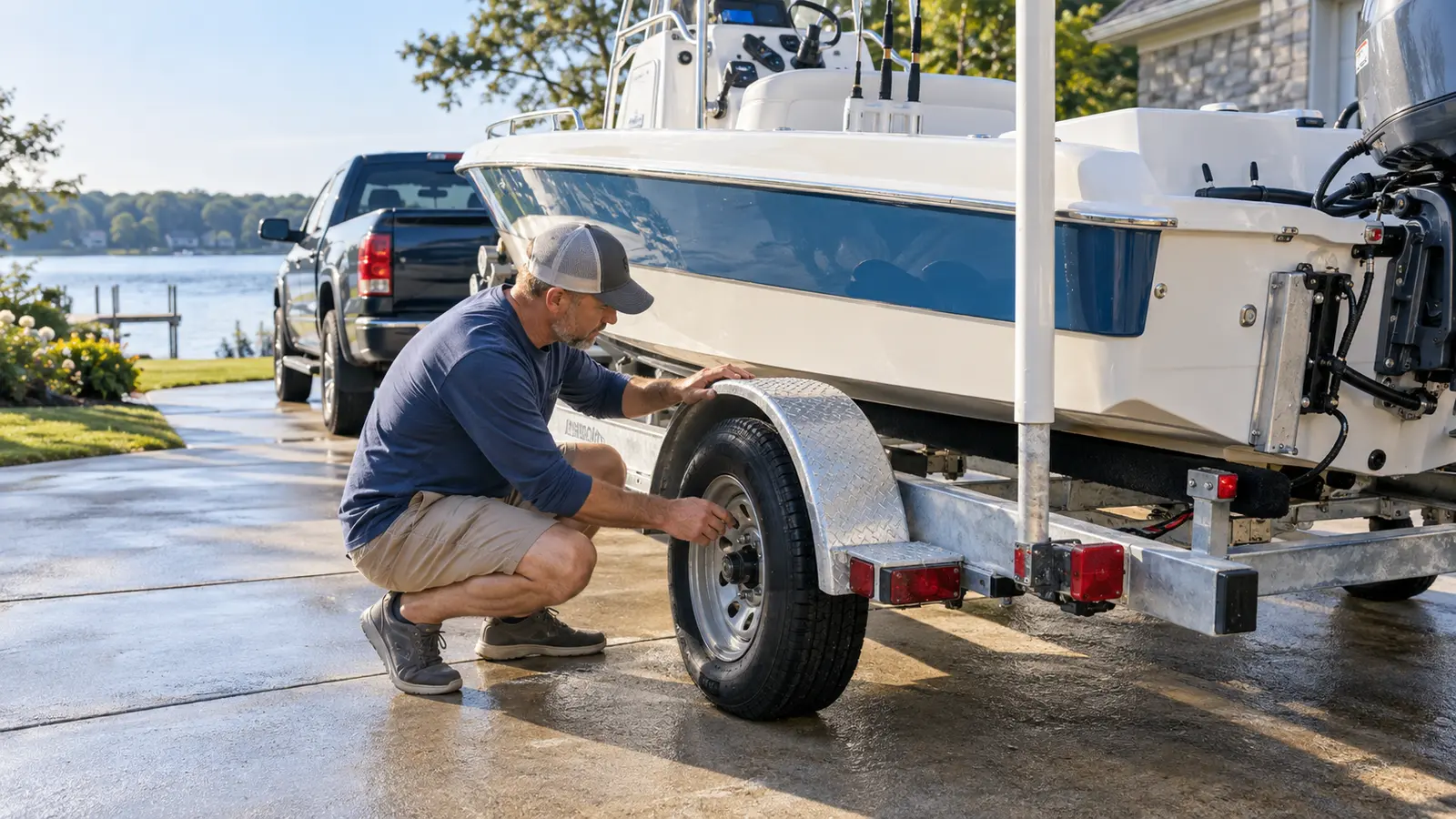
Boat trailer maintenance should make failures easier to catch before the boat reaches highway speed. Inspect the connection, tires, wheels, lights and load before every tow; rinse and examine immersed parts after launching; and service bearings, brakes and running gear at the intervals in the exact trailer and component manuals.
Quick answer: What maintenance does a boat trailer need?
A boat trailer needs correct cold tire pressure, sound tires and wheels, properly serviced bearings, working brakes and lights, a secure coupler and safety chains, reliable winch and tie-down gear, intact bunks or rollers, and regular checks of the frame, axle and suspension. Freshwater rinsing and drying are especially important after saltwater use. Model-specific torque values, lubricants, service intervals and adjustment procedures come from the trailer, axle, brake, tire and winch manufacturers.
Start with the trailer identity and capacity labels
Before ordering bearings, seals, brake parts, tires or lights, record the trailer manufacturer, model, VIN, gross vehicle weight rating (GVWR), axle rating, tire size and load range. Photograph the certification label before sun and salt make it unreadable. Keep the trailer owner’s manual and the separate manuals for the axle, brake actuator and winch when those components come from other manufacturers.
Capacity is not just the dry hull weight. The trailer carries the boat, engine, fuel, batteries, water and gear. Confirm the loaded combination stays within the trailer, axle, tire and tow-vehicle limits. NHTSA also advises buyers to look for the trailer’s federal certification label because compliant trailers must meet applicable safety standards for items such as lighting, tires and wheels.
Boat trailer maintenance schedule
| When | What to inspect | Stop condition |
|---|---|---|
| Before every tow | Coupler latch, safety chains, breakaway system, jack, winch strap, bow eye, transom tie-downs, tires, wheel fasteners, lights and visible load position. | Loose connection, damaged strap or chain, low or damaged tire, failed light, fluid leak or shifting boat. |
| After launch or retrieval | Rinse immersed frame, brakes, hubs and suspension as directed; inspect for impact, fishing line, debris, heat, grease leakage and corrosion. | Hot hub, grinding, wobble, brake drag, damaged wiring or fresh structural damage. |
| Monthly in active use | Cold tire pressure and tread, spare, corrosion, wiring, battery for electric breakaway equipment where fitted, bunk carpet or rollers, fasteners and lubrication points. | Bulge, exposed cord, severe cracking, irregular wear, loose hardware or support damage. |
| At manual intervals | Bearings and seals, brake inspection and adjustment, brake fluid where applicable, wheel-nut torque checks, suspension, actuator, coupler and winch service. | Contaminated linings, leaking hydraulics, rough bearing, cracked spring, worn coupler or uncertain adjustment. |
| Before storage | Wash, dry, repair coating damage, service due items, protect wiring connectors, inflate tires correctly and store on a stable surface. | Trapped salt, standing water, active rust, flat tire or overdue safety service. |
This is a planning framework, not a universal interval chart. Saltwater immersion, mileage, trailer design and component type change the work. Follow the shortest applicable interval in the manuals.
Check tires cold, including the spare
Tires can look acceptable while underinflated, overloaded or aged. Check pressure before towing while the tires are cold, using the pressure specified on the trailer certification or tire placard and the manufacturer documentation. Do not copy the tow vehicle pressure, and do not treat the maximum molded on an unrelated tire as a trailer-wide recommendation.
- Inspect both sidewalls and the full tread for cuts, bulges, cracks, punctures and exposed material.
- Look for uneven wear that may point to inflation, loading, bearing, suspension or alignment problems.
- Confirm the tire size, load range and combined capacity are correct for the trailer.
- Check the valve stems and caps, and make sure the spare is inflated, secure and accessible.
- Record the tire identification code and installation date so age is not judged from tread depth alone.
NHTSA recommends checking tire pressure and tread at least monthly and inspecting for physical damage or irregular wear. A trailer that has been parked for months still needs a cold-pressure and condition check before its first trip.
Inspect wheels, fasteners, hubs and bearings
Before a trip, scan each wheel for cracks, impact damage and missing or visibly loose fasteners. Use the trailer maker’s tightening pattern, torque value and recheck interval; overtightening can damage components just as surely as leaving a fastener loose. If a wheel was removed, follow the specified staged torque and recheck procedure rather than relying on an impact wrench setting.
After a short initial drive and at fuel stops, compare hubs cautiously for unusual heat without touching a possibly overheated hub. One hub that is markedly hotter, noisy, loose, leaking grease or rough when rotated needs inspection before continued towing.
Bearing systems are not all serviced the same way. Dexter’s guidance for many serviceable light-duty systems calls for bearing lubrication every 12 months or 12,000 miles, while its sealed systems have their own inspection rules. ShoreLand’r also recommends a yearly bearing check. Use those figures only when they match the installed components. Mixing incompatible grease, overfilling a hub, reusing a damaged seal or setting bearing clearance by guesswork can create a new failure.
Maintain the brakes and breakaway system
Trailer brake requirements vary by jurisdiction and trailer weight, while the service procedure varies by surge, electric, electric-over-hydraulic, disc and drum systems. Inspect the exact system installed.
- Look for hydraulic leaks, cracked hoses, corroded lines, damaged wiring and a low reservoir where applicable.
- Inspect rotors, drums, calipers, backing plates and mounting hardware for corrosion, wear and impact damage.
- Confirm the actuator moves normally and the coupler is not binding.
- Test the breakaway switch and battery according to the manufacturer’s procedure; never use the breakaway cable as a substitute for safety chains.
- Investigate pulling, grabbing, delayed release, noise, heat or weak braking before the next road trip.
Immersion makes inspection and freshwater rinsing especially important. If you cannot safely lift, support and service the trailer or verify brake adjustment, schedule a professional inspection.
Test lights and protect the wiring
Connect the trailer and test running lights, brake lights, turn signals and required marker and license-plate lights before every tow. Have another person observe them or use a reflection where it is safe. A light that works only when the harness is moved usually signals a connection or ground problem, not a repair completed by wiggling the plug.
Inspect the vehicle connector, ground points, junctions and wire runs for corrosion, pinching and damaged insulation. Keep plugs out of standing water and use only marine-appropriate sealed repairs. Disconnecting lights before immersion is not a substitute for a waterproof system unless the trailer manufacturer specifically instructs it.
Coupler, safety chains, jack and load security
- Confirm the match. The coupler and hitch ball sizes must agree, and both must be rated for the loaded trailer.
- Inspect the latch. Look for wear, damage, rust and incomplete engagement. Lubricate only where and with what the manufacturer specifies.
- Cross and secure the chains correctly. Check hooks, latches and attachment points. Chains should not drag or bind during turns.
- Attach the breakaway cable independently. Route it so normal turns do not pull it and a disconnection can activate it.
- Raise and secure the tongue jack. Inspect its wheel or foot, fasteners and mechanism before travel.
The boat must also be secured independently of the winch alone. Inspect the winch strap or cable, hook and bow-eye connection, then check the safety chain and transom tie-downs. Replace cut, frayed, sun-damaged, kinked or corroded parts with correctly rated components. Never stand in line with a loaded winch strap or cable.
Frame, axle, suspension, bunks and rollers
Walk the full trailer with good light. Check the tongue, crossmembers, welds, axle, springs or torsion components, fenders and mounting brackets for cracks, bending, heavy corrosion, loose hardware and fresh impact marks. A crack, shifted axle, broken spring or deformed structural member is not a cosmetic problem.
Boat support is part of trailer maintenance. Bunks should be solid, securely fastened and free of protruding hardware; carpet should not hold abrasive sand against the hull. Rollers should turn, stay aligned and support the intended hull areas. Inspect the bow stop and winch post for movement. Support adjustments affect load distribution and hull contact, so use the boat and trailer manufacturer guidance or a qualified dealer rather than repositioning supports by trial and error.
Rinse, drain and control corrosion
ShoreLand’r advises thoroughly rinsing the trailer after use, including the brakes, and gives extra attention to saltwater or acidic-water exposure. Use fresh water, avoid driving high-pressure spray into seals or connectors, and let hollow sections and brakes drain and dry. Rinse the coupler, winch, springs, hardware and rear lighting area—not just the visible frame rails.
Repair coating damage using the trailer maker’s process and compatible materials. Do not hide scaling rust, a cracked weld or brake-fluid contamination under paint. Galvanized and aluminum trailers still contain steel hardware and brake parts that can corrode.
Prepare the trailer for off-season storage
- Wash away salt, road grime and organic debris, then dry the trailer.
- Complete any bearing, brake, tire or coating work due before storage.
- Inflate tires to the specified cold pressure and park on a firm, well-drained surface.
- Protect the electrical connector and keep the breakaway battery maintained if fitted.
- Chock securely and follow the manufacturer’s long-term support guidance; do not improvise unstable stands.
- Record open repairs and the pre-season reinspection date in the boat maintenance log.
If the boat will also sit through freezing weather, use the boat winterization guide for the engine, fuel, plumbing, batteries and interior. Trailer storage does not replace boat winterization.
When to stop towing and call a technician
| Owner checks | Professional diagnosis or repair |
|---|---|
| Pressure, tread, lights and visible fasteners | Bulged tire, damaged wheel, repeated loosening or unknown wheel torque requirements |
| Visual hub temperature comparison and leak check | Hot, noisy, loose or rough hub; damaged seal; uncertain bearing setup |
| Brake-fluid level and visible component inspection | Leaks, contaminated linings, dragging brakes, failed actuator or hydraulic/electrical repair |
| Rinsing, drying and coating inspection | Cracked weld, bent frame, damaged axle, broken spring or advanced corrosion |
| Winch strap, tie-down and bunk inspection | Loose support structure, damaged bow eye or load-position problem |
Before-tow boat trailer checklist
- ☐ Coupler fully seated, latched and secured on the correct hitch ball.
- ☐ Safety chains attached correctly; breakaway cable attached independently.
- ☐ Tongue jack raised and secured.
- ☐ Winch strap or cable, safety chain and transom tie-downs sound and tight.
- ☐ Boat centered and supported; loose gear removed or secured.
- ☐ Tires cold-inflated to the specified pressure; no cuts, bulges or severe cracking.
- ☐ Spare tire inflated and secure.
- ☐ Wheel fasteners present; no visible looseness, damage or grease leakage.
- ☐ Running, brake, turn, marker and license lights working.
- ☐ Brakes and breakaway equipment pass their manufacturer checks.
- ☐ Frame, axle, suspension, bunks and rollers show no new damage.
- ☐ Registration, roadside equipment and trailer-specific tools are aboard.
Frequently asked questions
How often should boat trailer bearings be serviced?
Use the interval and lubrication system specified by the axle and trailer manufacturers. Dexter, for example, recommends lubricating serviceable bearings every 12 months or 12,000 miles, while some sealed systems use a different inspection or replacement procedure.
Should you rinse a boat trailer after every launch?
A freshwater rinse after immersion is especially important after salt, brackish, acidic or dirty water. Rinse the frame, brakes, hubs, springs, coupler and winch area as the trailer maker directs, then let the trailer drain and dry.
What tire pressure should a boat trailer use?
Use the cold inflation pressure specified on the trailer certification or tire placard and in the trailer or tire manufacturer guidance. Do not copy the tow vehicle pressure or guess from another trailer.
How do you know when boat trailer bearings are failing?
Possible warning signs include abnormal hub heat, noise, roughness, looseness, leaking grease or damaged seals. Stop towing and have the hub inspected if a wheel or hub behaves abnormally.
Can boat trailer maintenance be done at home?
Owners can usually handle visual checks, cleaning, light testing and manual-approved lubrication. Brake hydraulics, cracked frames, damaged axles, bearing setup, electrical faults and any procedure requiring unsafe lifting are better handled by a qualified trailer technician.
Sources and methodology
BoatOwner Hub used federal tire and trailer-safety information plus current component and boat-trailer manufacturer guidance. Model-specific instructions take priority over this general checklist.