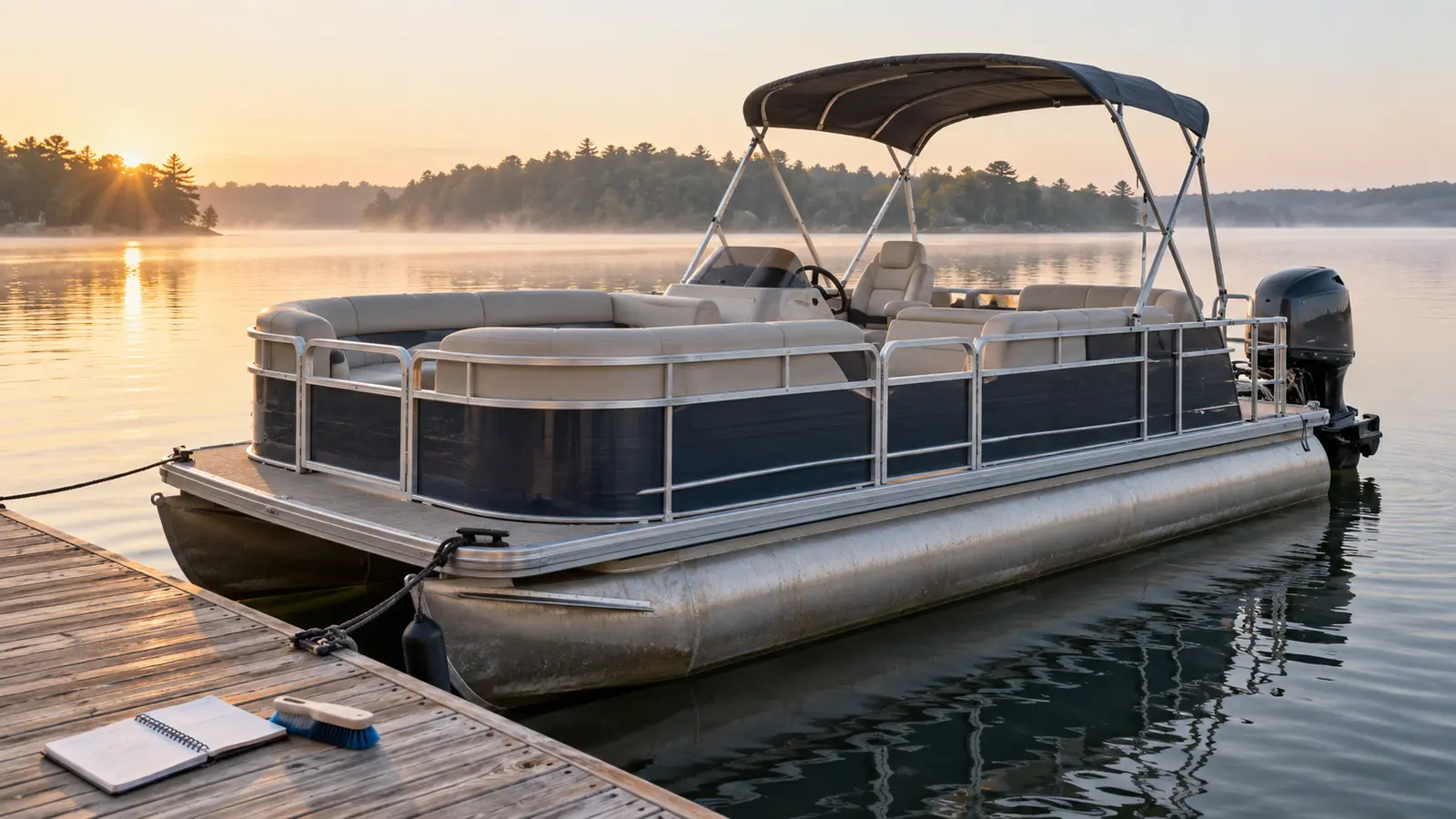
Good pontoon maintenance is not one annual cleaning. It is a repeatable system: inspect the boat before use, clean and dry the materials correctly, follow the outboard and component schedules, control corrosion, maintain the trailer, and prepare every system for storage.
Quick answer: What maintenance does a pontoon boat need?
A pontoon needs routine checks of its aluminum tubes, brackets and deck structure; material-safe care for flooring, furniture, canvas and the cover; scheduled outboard, fuel, battery, steering and electrical service; trailer inspection; safety-equipment checks; and climate-appropriate winterization or long-term storage. The exact procedures and intervals come from the manuals for the boat, engine, batteries, charger, trailer and installed accessories.
The schedule below is a planning guide, not a substitute for model-specific instructions. The 2026 Barletta pontoon/deck-boat manual, for example, separates corrosion protection, aluminum pontoon inspection, upholstery, canvas, flooring, engine, fuel, electrical, trailer and storage care. Mercury likewise directs owners to the inspection and maintenance schedule in the exact engine manual. Use whichever requirement is more specific to your equipment and operating conditions.
Pontoon maintenance schedule at a glance
| When | Priority checks | Record |
|---|---|---|
| Before every outing | Walk around the tubes and deck; check fuel, battery, steering, lights, horn, bilge or livewell pump where fitted, drain plug where applicable, safety gear, propeller area and trailer connection. | New damage, leaks, low voltage, warning lights or items due soon. |
| After use | Remove trash and wet gear, rinse salt or dirty-water residue as required, use the engine’s approved flush procedure, dry upholstery and compartments, and cover only when dry. | Operating hours, water conditions and anything unusual. |
| Monthly in season | Inspect tubes, welds, brackets, hardware, steering, fuel hoses, electrical connections, battery condition, canvas, flooring, trailer tires, wheel hardware, winch and lights. | Wear trends, corrosion, loose fasteners and repairs. |
| At engine hour or calendar intervals | Complete the outboard manual’s oil, filter, gearcase, fuel, spark-plug, lubrication, anode, cooling-system and other scheduled work. | Date, engine hours, parts, fluids and next due interval. |
| End of season or extended storage | Clean and dry the boat, prepare fuel and water systems, service the engine, manage batteries, inspect the trailer, support the hull correctly and use a ventilated storage cover. | Storage preparation and recommissioning checklist. |
Before every trip: the pontoon walk-around
- Inspect both tubes from bow to stern. Look for fresh dents, scrapes, cracked or distorted weld areas, missing fasteners and one side sitting unusually low in the water.
- Check the deck and rails. Confirm gates latch, rails are secure, flooring is not lifting and furniture bases, seat hinges and boarding hardware are sound.
- Inspect the stern systems. Look for fuel or oil leaks, damaged hoses, loose battery cables, overheated wiring, obstructed pump inlets and steering leaks or binding.
- Check the outboard and propeller area. With the engine unable to start, look for impact damage, line around the propeller shaft, loose mounting hardware and anything blocking water inlets.
- Test operating and safety equipment. Confirm navigation lights, horn, pumps, gauges, alarms, emergency-stop lanyard and required life jackets and fire extinguishers are present and serviceable.
The U.S. Coast Guard’s federal requirements guide covers carriage and condition requirements for safety equipment. State rules and the boat’s operating area may add requirements, so include a periodic Vessel Safety Check in the maintenance plan rather than treating safety gear as permanent cargo.
Inspect and care for the aluminum pontoon tubes
Aluminum naturally changes appearance as it oxidizes, so discoloration alone is not proof of structural failure. What matters is change: a new impact mark, active corrosion, a damaged weld, unexplained listing, reduced performance or water sounds inside a chamber. Barletta’s 2026 manual warns that water entering a pontoon can add weight, reduce performance, increase engine load and raise fuel consumption.
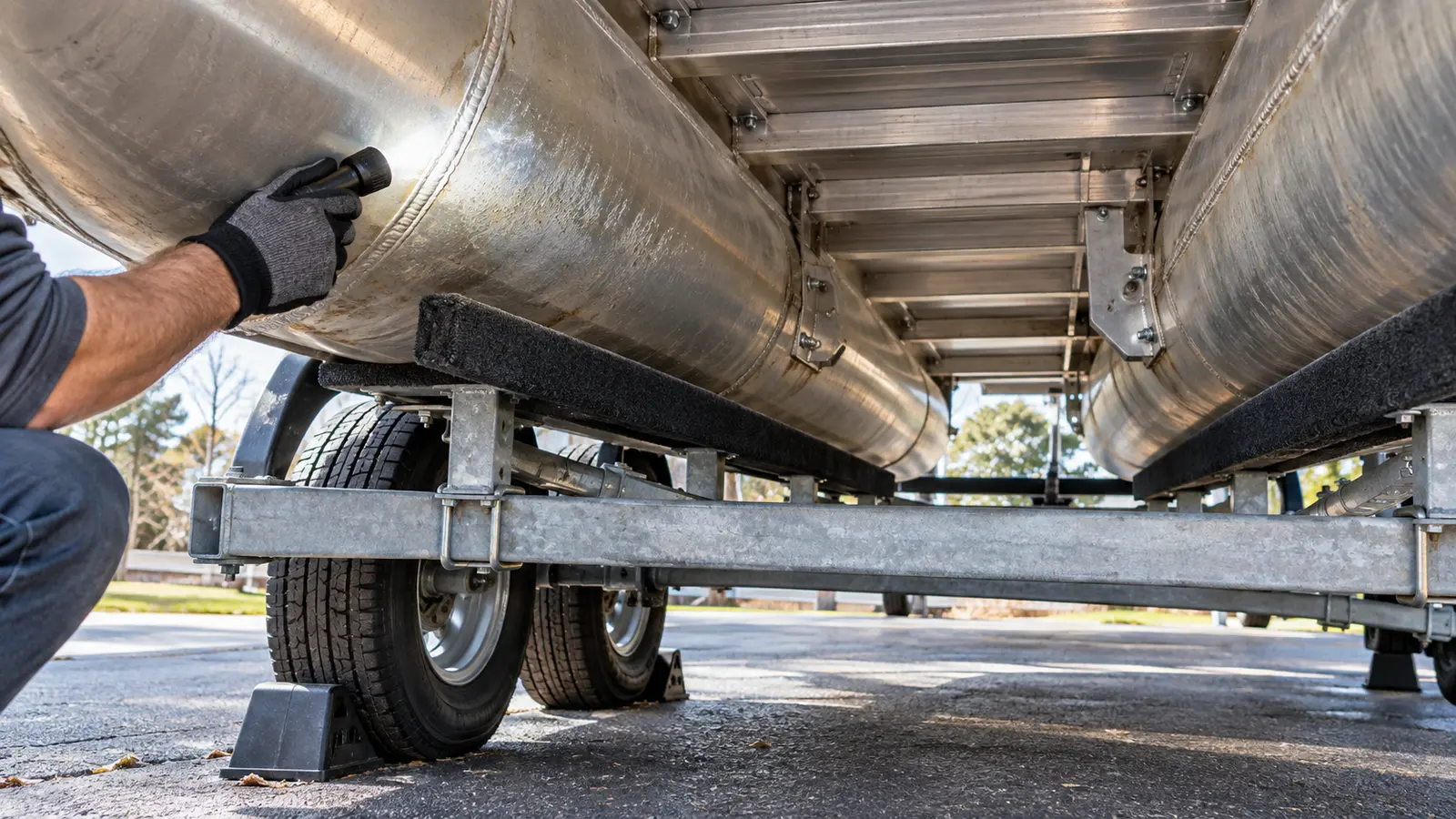
- Clean marine growth before it becomes difficult to remove, using methods approved for the tube finish or coating.
- Use a soft brush or sponge and mild soap when the boat manual permits it; rinse completely.
- Do not apply a random metal cleaner, acid wash, polish, bottom paint or anode material. Aluminum compatibility and existing coatings matter.
- Never drill a suspected chamber or attempt a structural weld without the boat manufacturer or a qualified aluminum-boat repairer.
- Inspect where trailer or lift bunks contact the tubes. Trapped salt, debris or poor support can concentrate damage.
Saltwater and brackish-water use
Saltwater makes prompt rinsing and corrosion control more important. Barletta instructs owners to remove salt deposits quickly, rinse and wash the hull and deck, let the boat dry before covering, and follow the engine manual for flushing. Its manual also cautions that salt held in trailer or lift bunks can accelerate aluminum corrosion. Ask the boat manufacturer or dealer about compatible barrier coatings and sacrificial anodes for the exact model and water—not what happens to be popular at the dock.
Clean the deck, furniture and canvas by material
A pontoon interior combines materials that cannot all tolerate the same cleaner or pressure. Start with the boat manual, then check the label or care guide for the exact vinyl, flooring and canvas. Test an approved method in a small hidden area before treating a visible surface.
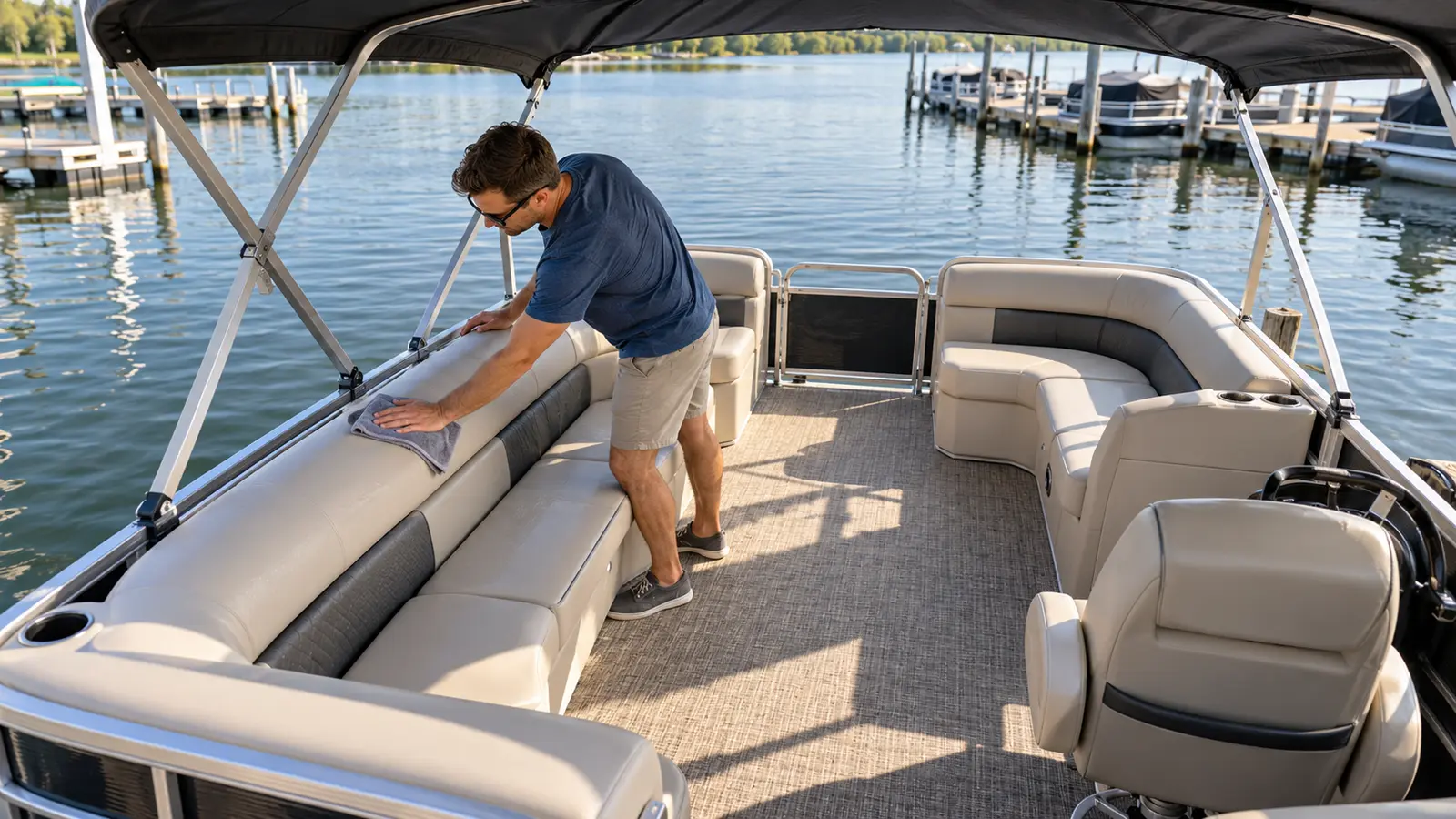
Vinyl seating
Remove grit first, then use the maker’s mild cleaning method with a soft cloth or brush. Rinse residue and dry seams and cushion undersides. Sunscreen, food, fish residue and wet leaves are easier to remove promptly. Avoid assuming household bleach, solvent, abrasive pad or “magic” sponge is safe; a cleaner that removes a stain can also damage the protective topcoat. See the full guide to cleaning marine vinyl seats safely.
Flooring and storage areas
Vacuum or sweep loose sand and crumbs before wet cleaning. Use the flooring maker’s approved cleaner and brush stiffness, rinse completely, and leave hatches open until the space is dry. Remove food before storage because crumbs and packaging attract pests.
Canvas, bimini and covers
Clean canvas gently, rinse it and let it dry fully. Barletta’s manual says never to store wet canvas and recommends loose rolling rather than folding permanent creases. Support the cover so water can drain, keep ventilation paths open and remove pooled water. A mooring cover is not automatically designed for trailering or heavy snow loads.
Maintain the outboard on its own schedule
The pontoon builder’s manual does not replace the engine manual. Record the outboard model, serial number and hours, then follow its time-and-hour schedule for inspections, oil and filter service where applicable, gearcase lubricant, fuel filters, spark plugs, lubrication, cooling-system service, anodes and storage preparation.
Use the detailed outboard motor maintenance schedule for a manual-first routine. After salt, brackish or dirty-water operation, use only the approved flushing connection, engine position and run-or-do-not-run procedure for that model. A visible telltale stream does not prove the entire cooling system is healthy.
Fuel, battery and electrical systems
Fuel system
Before fueling and at the interval in the boat manual, inspect hoses and connectors for leakage, cracking, softness or deterioration. Check that fill and vent paths are unobstructed. Gasoline odor is a stop condition. Do not increase fuse sizes, bypass a breaker or add accessories by tapping convenient wires; repeated circuit protection failure indicates a fault that must be found.
Battery system
Confirm the battery is secured, terminals are protected, cables are tight and there is no swelling, leakage, heat damage or heavy corrosion. Keep the charger profile compatible with the exact battery chemistry. Our guides explain how to charge a boat battery safely and test resting voltage with a multimeter. Voltage alone does not prove starting capacity.
Steering, gates, hardware and onboard pumps
Move the steering through its normal range before departure and look for binding, unusual free play, leaking hydraulic fluid or damaged linkages. Inspect gate latches, ladders, cleats, seat hinges, bimini mounts and rail fasteners. Do not casually tighten structural or steering hardware without the correct torque and locking method.
If the pontoon has a bilge, motor-pod, livewell or sump pump, clear debris from accessible screens and test operation and automatic switches as the manual permits. Keep the motor-pod area clean enough that new leaks, damaged hoses and loose wiring are visible.
Pontoon trailer maintenance
A wide, heavy pontoon places specific demands on its trailer and support geometry. Before every tow, check the coupler, safety chains, breakaway system where fitted, winch strap, bow stop, tie-downs, tires, wheel hardware, lights and load security. At scheduled intervals inspect bearings, brakes, bunks, fasteners, frame, axle, springs and wiring.
Use the pressure listed for the trailer tire and verify the trailer’s capacity and support arrangement for the exact pontoon. Never crawl under a trailer-supported boat unless an approved procedure and rated support system make the work safe. Use the dedicated boat trailer maintenance checklist for tires, bearings, brakes, lights and coupling hardware; the general boat maintenance checklist coordinates that work with the rest of the vessel.
End-of-season and long-term storage
- Finish maintenance before storage. Winterization does not erase overdue engine, trailer or system service.
- Clean the tubes and exterior. Remove marine growth, salt and debris with approved methods, then inspect the clean surfaces.
- Dry the interior completely. Remove food, wet life jackets and towels; dry cushions, compartments, canvas and flooring.
- Prepare engine, fuel and water systems. Follow each manufacturer’s storage and freeze-protection procedure rather than a generic recipe.
- Manage batteries correctly. Charge, disconnect, remove or maintain them only as the battery, charger and boat manuals specify.
- Support and cover the boat properly. Use the correct trailer, lift or engineered cradle; provide drainage and ventilation; and choose a cover rated for the expected weather load.
For freezing climates and full system preparation, use the boat winterization guide. A poor support arrangement or cover that traps moisture can cause damage even when the engine was winterized correctly.
Warning signs that should stop the trip
- One tube sits lower, water is audible inside a tube, or performance changes without explanation.
- A new crack, distorted weld, major dent or loose structural bracket appears.
- Fuel odor, wet fuel fittings, damaged hoses or unexplained oily residue is present.
- Steering binds, leaks or has unusual free play.
- Wiring is hot or discolored, or a fuse or breaker fails repeatedly.
- The outboard alarms, overheats, vibrates heavily or shows abnormal cooling-water flow.
- The trailer has tire damage, loose wheel hardware, bearing heat, brake faults or structural corrosion.
Printable pontoon maintenance checklist
- ☐ Record boat, engine, battery and trailer identification.
- ☐ Keep the correct manuals and service records.
- ☐ Inspect tubes, welds, brackets and deck structure.
- ☐ Test gates, ladders, steering, lights, horn and pumps.
- ☐ Inspect fuel hoses, vents and electrical protection.
- ☐ Check battery security, cables and charger compatibility.
- ☐ Inspect the outboard, propeller and cooling-water inlets.
- ☐ Clean upholstery, flooring and canvas by material.
- ☐ Rinse and dry after salt or dirty-water exposure.
- ☐ Inspect trailer tires, hubs, lights, bunks and restraints.
- ☐ Complete engine hour- and calendar-based service.
- ☐ Prepare every system for storage and record recommissioning tasks.
Frequently asked questions
How often should a pontoon boat be serviced?
Inspect the boat before every outing, clean and dry it after use as conditions require, complete monthly in-season checks, and follow the boat, outboard, battery and trailer manuals for hour-based, calendar-based and annual service.
How do you maintain aluminum pontoons?
Inspect the tubes for dents, leaks, impact marks and corrosion; remove marine growth with methods approved by the boat manufacturer; rinse promptly after salt or brackish water; and use only compatible coatings, cleaners and anodes.
Can you pressure wash a pontoon boat?
Follow the boat and material manufacturers’ instructions. A manufacturer may allow controlled pressure washing on bare aluminum tubes while prohibiting it on vinyl, canvas, flooring, electrical components and the boat interior.
What maintenance does a pontoon need before winter storage?
Clean and dry the boat, remove food and wet gear, service and protect the engine as its manual specifies, prepare fuel, batteries and water systems, inspect the trailer, support the boat correctly and use a ventilated cover designed for storage conditions.
Does a saltwater pontoon need different maintenance?
Yes. Salt and brackish water increase the need for prompt freshwater rinsing, model-approved engine flushing, corrosion inspections, compatible anodes and coatings, clean trailer or lift bunks, and careful attention to electrical connections and hardware.
Sources and methodology
BoatOwner Hub used current manufacturer instructions for pontoon materials and systems, engine-manufacturer guidance for scheduled outboard care, and U.S. Coast Guard resources for safety equipment. The exact manuals supplied with your boat and components remain the controlling sources.