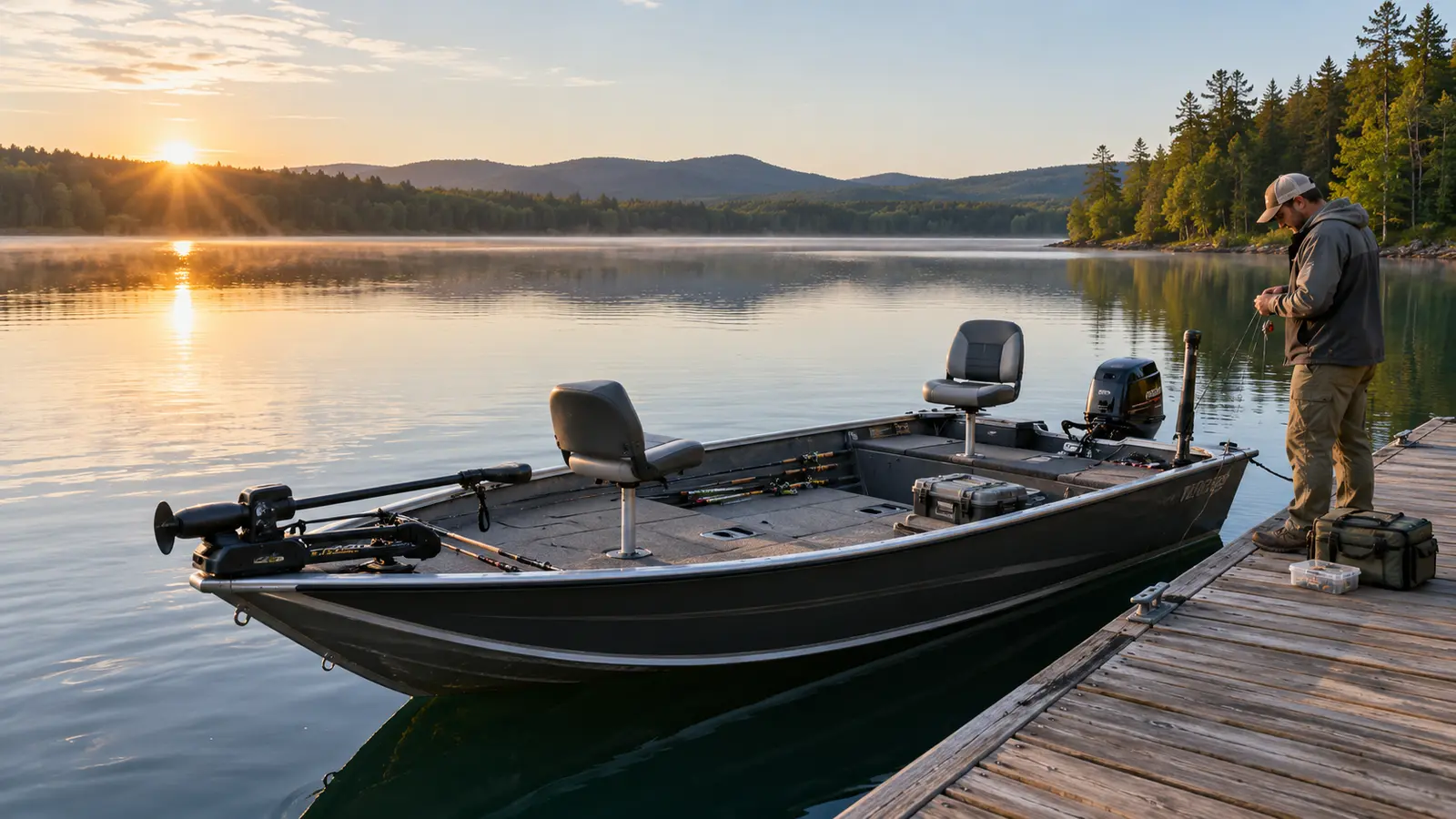
The best fishing boats for lakes are not one model or even one hull style. For many owners, an aluminum multi-species boat is the strongest all-around starting point. A mod-V jon boat can be better for small sheltered water, a bass boat for dedicated casting, a deep-V fishing boat for larger exposed lakes, and a fishing pontoon for space and stability. Choose from the lake outward, not from the showroom feature list inward. For the broader cross-environment taxonomy, compare the main types of fishing boats and their best uses.
Quick answer: Which lake fishing boat should you choose?
Choose the smallest boat that safely handles your normal lake conditions, crew, load and fishing method without exceeding your towing, launch or storage limits. Match hull shape and freeboard to likely wind and chop. Confirm the capacity label, usable deck space, seating, rod storage, propulsion, battery needs and trailer weight before comparing optional electronics.
Best lake fishing boat types by use
The word “best” only becomes useful when it is tied to a job. Lake fishing boats that look similar at the dock can feel very different once people, tackle, a cooler, batteries and safety equipment are aboard.
| Boat type | Best fit | Main strength | Important limitation |
|---|---|---|---|
| Aluminum multi-species boat | Small to large inland lakes, mixed fishing styles | Adaptable layout, moderate towing weight and useful protection | Ride, finish and storage vary widely. Compare the exact hull and loaded package. |
| Mod-V jon boat | Small, sheltered and shallow lakes | Simple, light and easy to launch | Flat sections can pound in chop and low sides demand conservative weather choices. |
| Bass boat | Casting-focused fishing on managed lakes and reservoirs | Large casting decks, low-profile storage and quick movement between spots | Low seating, deck steps and specialized layout may be less flexible for families or mixed use. |
| Deep-V fiberglass fishing boat | Large or exposed lakes where wind chop is common | More mass, higher sides and a hull designed for rougher water | Heavier towing, deeper launch needs and higher ownership costs are common. |
| Fishing pontoon | Calmer lakes, larger crews and relaxed fishing | Room, seating, stability at rest and easy movement | Windage, wide trailers, storage space and fishing around furniture require planning. |
| Skiff or small center console | Large lakes, varied use and open-deck fishing | Simple circulation, flexible deck space and easy cleanup | Weather protection and enclosed storage may be limited. |
| Portable inflatable | Sheltered water where compact storage is the priority | No rigid-hull storage or trailer is needed for some setups | Setup time, wind, hooks, usable floor space and propulsion limits narrow the use case. |
Match the boat to the lake before the fishing technique
A narrow lake surrounded by trees is a different operating environment from a broad reservoir with miles of open water. Long open stretches let wind build waves. Afternoon weather can turn a comfortable morning ride into a slow trip home. Look at the water you will use most often, not the calmest photograph of it.
- Small sheltered lakes: light boats, simple ramps and electric-only rules may favor a jon boat, small aluminum rig or approved portable boat.
- Large reservoirs: more freeboard, secure seating, protected storage and a hull that handles chop can matter more than maximum speed.
- Shallow vegetation or timber: draft, propeller protection and maneuverability may outweigh cabin-like comfort.
- Cold or exposed water: reserve capability, boarding arrangements, weather protection and a conservative operating plan deserve extra weight.
Before buying, check the rules for your actual lakes. Some restrict horsepower, combustion engines, live bait, ballast systems or launch access. Others require invasive-species inspection or decontamination. A boat that does not fit the local launch or rules is not the right lake boat, even if its fishing layout is excellent.
Understand what the hull changes
Hull form affects draft, stability at rest, ride in chop and how much power is needed. A flatter bottom can feel steady on calm water and run shallow, but it can strike waves more abruptly. A deeper V can soften the ride when the lake gets rough, but it usually sits deeper, needs more power and may feel less firm when anglers move from side to side at rest.
Do not judge stability from width alone. Weight distribution, hull shape, seating height and where batteries, fuel and gear are placed all matter. Test the exact boat with a realistic crew when possible. A showroom floor cannot show how the boat reacts when two anglers move to the same side.
Choose size from crew, load and exposure
There is no universal best length for fishing boats for lakes. Start with the people and equipment carried on a normal trip. Count adults, children, tackle, coolers, anchors, batteries, fuel and any portable motor or livewell load. Then add the lake conditions the boat must handle and the places it must fit on land.
Read the capacity information on the boat and follow the builder's manual. The U.S. Coast Guard's federal recreational-boating guide explains required equipment and loading considerations. A maximum capacity is a limit, not a comfort target. Four people may be legal by count and still leave too little clear deck space for four people to cast safely.
Evaluate the working layout with real gear
Useful deck area matters more than brochure length. Walk through a normal fishing day and assign a place to every object. Rod tips should not cross a walkway. Tackle should stay closed and secured. A landing net should be reachable without blocking controls. Required safety equipment must remain accessible after the fishing gear is aboard.
- Can two anglers cast without crossing lines or stepping over open tackle?
- Is there a secure place for rods while the boat is underway?
- Can everyone move from bow to stern without stepping on seats or coolers?
- Are the helm, emergency controls, fire extinguisher and life jackets unobstructed?
- Will the livewell, cooler and battery weight stay within the approved load and balanced location?
- Can wet gear dry without filling enclosed storage with moisture?
For a smaller boat, use the small-boat fishing gear organization guide to test whether the layout will stay usable after the equipment is loaded.
Plan propulsion, trolling power and charging together
The outboard, trolling motor, batteries and charging system are one package. Do not choose a trolling motor from thrust alone or add electronics after the battery plan is finished. Record the expected runtime for sonar, pumps, lighting and trolling. Then confirm battery chemistry, capacity, mounting, cable size, circuit protection and charging with the applicable manufacturer instructions.
An electric-only lake changes the decision. Range depends on speed, wind, current, load, battery condition and reserve. Use the battery runtime calculator for a planning estimate, then keep a conservative margin. The estimate does not replace the motor and battery documentation or an on-water return plan.
Check the land side of the purchase
A good fishing boat must also fit the tow vehicle, storage space and launch. Compare the loaded trailer weight, tongue weight range, overall length, beam and height with the vehicle ratings and the route home. Include fuel, batteries, anchor, electronics and normal gear rather than relying on a dry hull number.
Walk your usual ramp. Note its width, slope, dock position, overhead clearance, parking length and shallow-water conditions. A larger boat can provide more lake capability but create a harder launch for one person. If the boat will stay in a slip, include lift capacity, cover fit, charging access and storm procedures.
Budget for the complete lake fishing setup
The purchase price is only the first number. Price the trailer, required safety equipment, registration, insurance, storage, winterization, batteries, charger, trolling motor, sonar, cover and annual maintenance. A less expensive boat that needs a tow-vehicle change or paid storage may cost more to own than a better-matched package.
Use the boat maintenance cost guide to identify recurring categories. For fuel-powered choices, the boat fuel cost calculator can turn expected hours and consumption into a planning range. Do not compare boats on monthly payment alone.
Inspect a used lake fishing boat as a complete system
First-time owners should also use the broader first boat buying checklist to verify the ownership documents, insurance, storage, budget, written agreement and first 90-day plan.
On a used boat, verify the hull identification, title and service records before evaluating upgrades. Inspect the hull, transom, floor, stringer or structural system, steering, fuel system, wiring, bilge, livewell plumbing, trailer and engine. Moisture, corrosion, damaged wiring or a weak trailer can outweigh the value of included electronics.
Arrange a qualified marine survey or inspection when the construction, value or condition warrants it. Run the exact engine under appropriate conditions and confirm fault history and service status through a qualified technician. Treat old sonar, batteries and accessories as separate value decisions. They should not hide a poor hull or mechanical package.
A verified portable option for sheltered lake use

Intex Excursion 4
Useful for: owners who need a packable boat for occasional outings on sheltered water and can follow the exact model's capacity, manual, propulsion limits and local rules.
Limitation: it does not provide the rigid casting deck, permanent mounting, rough-water capability or fast launch routine of a purpose-built aluminum or fiberglass fishing boat. Four-person capacity also does not mean comfortable space for four anglers and their gear.
Read the complete reviewThe review covers the current 68324EP identity, included equipment, capacity conflict, fishing-space limits and setup questions.Plan safety and lake protection before the first launch
Use the boat fishing essentials checklist to organize required equipment, weather checks and a float plan. Review how to pass a fishing boat safely for overtaking, wake and clearance rules around anglers. The U.S. Coast Guard's guidance should be read together with state and local requirements, which can add rules for education, life jackets, lighting, sound signals and registration.
Boats also move aquatic organisms between lakes. The National Park Service advises boaters and anglers to clean, drain and dry boats and fishing gear. Drain the motor, bilge, livewell and other compartments as local rules require. Never transfer water, plants, bait or organisms from one water body to another.
Lake fishing boat buying checklist
- ☐ List the three lakes you will use most often.
- ☐ Record lake size, exposure, depth, hazards and local boat rules.
- ☐ Define the normal crew, maximum crew and realistic gear load.
- ☐ Choose the fishing method and the deck tasks it requires.
- ☐ Compare hull form, freeboard, draft and ride for likely conditions.
- ☐ Verify the capacity label and builder documentation.
- ☐ Test seating, movement routes, rod storage and safety-equipment access.
- ☐ Plan the outboard, trolling motor, batteries, wiring and charging as one system.
- ☐ Confirm loaded trailer weight, tow ratings and storage dimensions.
- ☐ Walk the normal launch and measure parking and dock constraints.
- ☐ Price registration, insurance, maintenance, storage, fuel and winter care.
- ☐ Arrange an appropriate inspection and on-water trial before buying used.
If your shortlist includes an aluminum hull, plan upgrades with the aluminum fishing boat accessories guide before drilling or filling limited deck space.
Frequently asked questions
What type of fishing boat is best for a lake?
For many owners, an aluminum multi-species boat is the most adaptable lake choice because it balances open fishing space, moderate weight and useful protection. A mod-V jon boat can suit small calm water, a bass boat favors casting, a deep-V boat adds capability on larger exposed lakes, and a fishing pontoon prioritizes room and stability. The right answer depends on the actual lake, crew and launch.
How big should a lake fishing boat be?
Choose size from the lake's exposure, normal crew, total load, launch, storage and tow vehicle rather than from a single recommended length. A boat that works on a small sheltered lake may not provide the freeboard, ride or reserve needed on a large lake when wind builds.
Is an aluminum or fiberglass boat better for lake fishing?
Aluminum boats are often lighter to tow and practical around shallow or rocky water. Fiberglass boats can provide more mass, integrated shapes and a different ride on larger water, but they are commonly heavier and may cost more to tow, store and repair. Compare complete boats, not material alone.
Can an inflatable boat be used for lake fishing?
A manufacturer-approved inflatable can work for sheltered water when its capacity, manual, propulsion limits and local rules fit the trip. It is not a substitute for a rigid fishing boat when you need a standing casting deck, permanent electronics, frequent rough-water use or substantial onboard storage.
Sources and method
This guide compares boat types by use case. It does not name a universal winner or claim hands-on testing. Safety and environmental points were checked against current public guidance. Boat-specific loading, power and maintenance decisions should follow the label and documentation for the exact boat, motor, battery, trailer and equipment.
- U.S. Coast Guard: A Boater's Guide to the Federal Requirements for Recreational Boats
- National Park Service: Aquatic Invasive Species
- BoatUS Foundation: Boat Types and Uses
Continue with the Fishing Boats hub or browse all fishing boat buying guides.