Clean by material
Remove residue promptly and use products compatible with vinyl, gelcoat, aluminum, nonskid and screens.
Fishing adds hooks, bait, fish waste, wet storage and specialized electronics. A repeatable post-trip routine protects both boat and gear.
Reviewed October 1, 2026
Remove residue promptly and use products compatible with vinyl, gelcoat, aluminum, nonskid and screens.
Open lockers, rinse livewells as appropriate and dry tackle and safety gear before long-term storage.
Check pumps, strainers, electrical connections, transducer mounting, trailer components and corrosion points.
Browse the newest fishing boat articles. Up to 16 appear on each page.

Choose layers, sun protection, a life jacket and secure deck shoes for the water and forecast.
Read guide
Apply the overtaking rules, slow early, control your wake and choose the safest passing side for the actual waterway.
Read guide
Match the hull, size, layout, power and trailer to the lake and crew you will actually use.
Read guide
Build a first-trip checklist around safety, current regulations, compact tackle, secure storage and changing conditions.
Read guide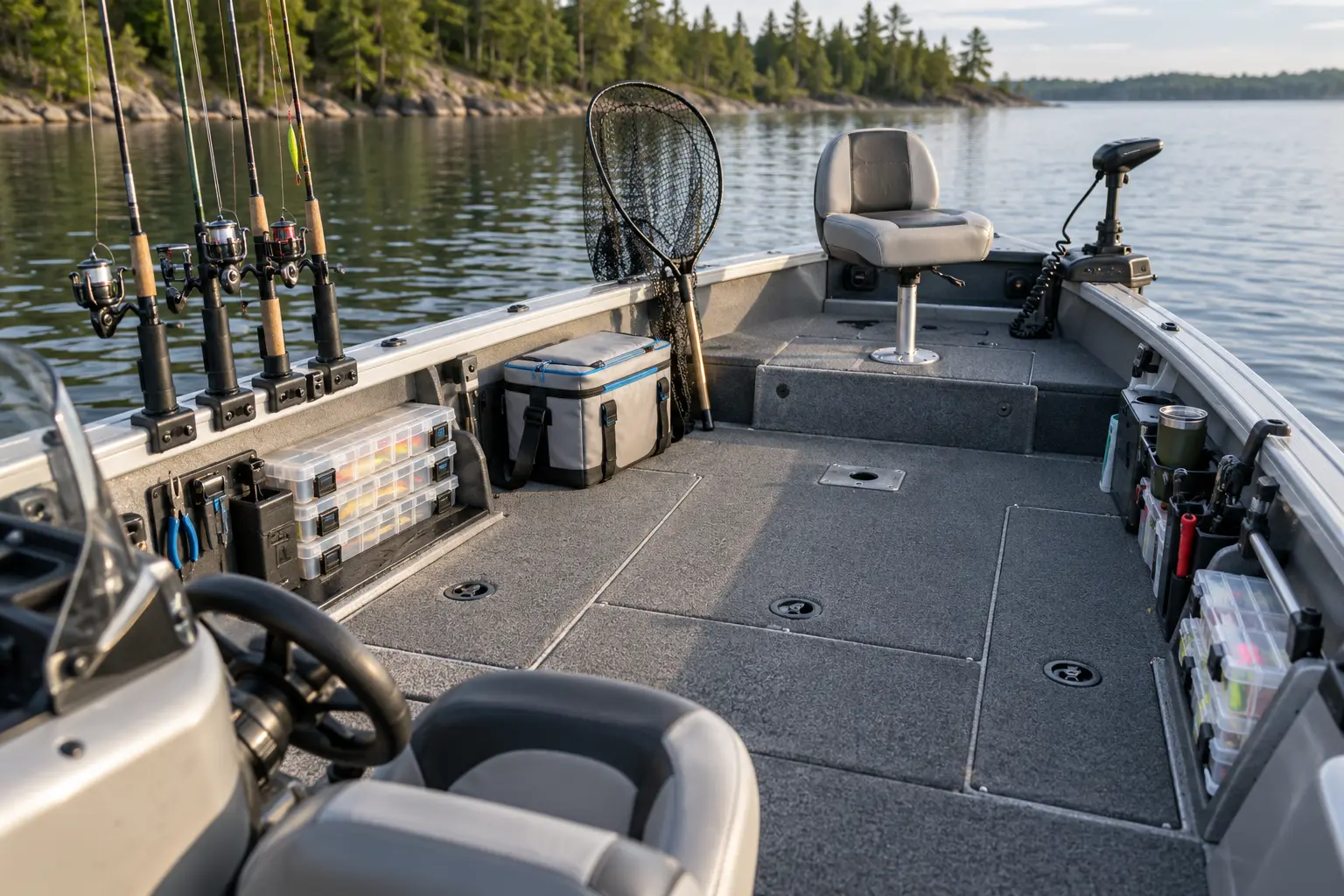
Use clear movement zones and secure rods, tackle, nets, coolers and tools without blocking safety equipment.
Read guide
Match sonar, GPS, mapping, display, transducer and installation requirements to your boat and water.
Read guideRemove bait and fish residue, rinse appropriate surfaces and gear, clear drains and dry storage areas. The boat maintenance checklist helps connect post-trip care with seasonal work.
Rinse salt from compatible surfaces, trailer parts and equipment, flush the engine as directed, dry storage and inspect corrosion-prone connections.
Remove debris, rinse using the boat maker’s procedure, inspect pumps and strainers, and leave the system dry or ventilated when stored.
Inspect tires, hubs, lights, winch, straps, coupler and corrosion, especially after saltwater launches. Use the boat trailer maintenance checklist for a fuller routine.
Not automatically. Check the boat and product manufacturer guidance because abrasives, solvents and strong chemicals can damage finishes. The EPA’s marina and boating guidance also explains why cleaner and waste runoff need care.
Power equipment down, use only manufacturer-approved methods, avoid spraying connectors directly and let protected connections dry before storage.
Only completed, source-checked product reviews are listed as recommendations.